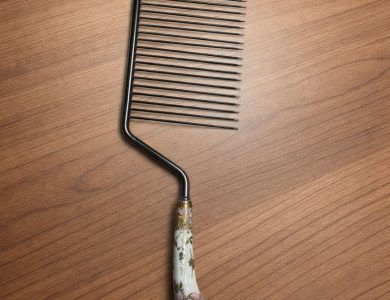
Found these strange scissors in the cutlery drawer. They have a circular opening with teeth instead of blades. Does not cut paper…
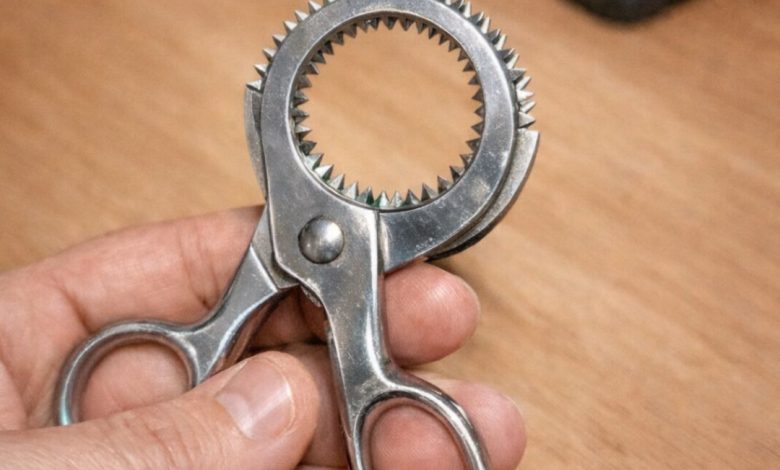
Most people expect anything shaped like scissors to cut. So when you find a strange tool in the kitchen drawer with handles like scissors but a round, toothed opening instead of blades, it can be confusing. It does not slice paper, trim packaging, or work like any normal pair of kitchen shears. That is because it was never meant to.
This unusual gadget is usually an egg topper, a small kitchen tool designed to remove the top of a soft-boiled egg neatly and cleanly. While it may look odd at first, it actually has a very specific purpose and can be surprisingly useful once you know what it does.
What makes it different from regular scissors
Traditional scissors work by bringing two sharpened blades together to cut through a material. An egg topper works in a completely different way. Instead of slicing, it uses a circular opening with small serrated teeth to grip the shell and create an even crack around the top of the egg.
Because of that design, it is not supposed to cut paper at all. The teeth are made to press and crack, not shear like blades. That is why it feels like scissors in your hand but behaves nothing like scissors in use.
Its real job: opening soft-boiled eggs without the mess
The main purpose of an egg topper is simple: it helps remove the top of a soft-boiled egg without crushing the shell or sending fragments into the egg. This is especially helpful when serving eggs in an egg cup, where the goal is to open the shell cleanly and eat the inside with a spoon or dip toast into the yolk.
For people who enjoy a classic soft-boiled breakfast, this gadget can make the experience much neater. Instead of tapping randomly with a spoon or trying to cut the shell with a knife, the topper creates a more controlled break.
How the toothed ring works
The design is clever. You place the circular part over the narrow top of the egg, then gently squeeze the handles. The teeth press evenly around the shell, forming a consistent crack line near the top. Once that happens, you can lift away the cap of shell and reveal the egg inside.
The goal is not to cut deeply into the shell. The tool works by applying balanced pressure so the shell breaks in a tidy ring rather than splintering.
How to use it the right way
Using an egg topper is easy once you know the method.
First, set your soft-boiled egg upright in an egg cup so it stays stable. Then place the topper over the top of the egg. Squeeze the handles gently and evenly until the shell cracks. Remove the tool, then lift off the shell cap with your fingers or a small utensil.
When used correctly, the result is a clean opening with far less mess than many improvised methods.
Why it works best for soft-boiled eggs
This tool is most useful for soft-boiled eggs, where presentation and easy access matter. Since the inside is still soft or runny, peeling the whole egg is not practical. You want an opening at the top, not a fully peeled shell.
For hard-boiled eggs, the need is much smaller. Most people simply peel those by hand. An egg topper can still be used if someone wants a neater presentation, but it truly shines with soft-boiled eggs.
Common versions you might find
Not every egg topper looks exactly the same. Some resemble scissor-like tongs with a toothed circle, while others use a spring-loaded or drop-weight mechanism to crack the shell. There are also dome-shaped models that create the break with a quick tap or release action.
Even with these variations, they all serve the same purpose: opening the top of an egg cleanly.
How to tell it is an egg topper
If you are trying to identify one in a drawer full of random kitchen tools, look for a few clues. The biggest sign is the round opening sized for an egg, along with small teeth or ridges instead of blades. Another clue is that it feels sturdy but does not work well on paper, plastic, or other everyday materials.
In other words, if it looks like scissors but fails at scissor jobs, it may be doing exactly what it was designed to do.
Cleaning and safety
Egg toppers are usually made from stainless steel, which makes them durable and easy to wash. In most cases, warm soapy water is enough. Many are also dishwasher safe, though drying them thoroughly afterward helps prevent wear over time.
While the teeth are not razor-sharp, they can still pinch skin if used carelessly. It is best to keep fingers clear of the ring while squeezing the handles.
Can it be used for anything else?
Some people try using egg toppers on soft fruits or delicate garnishes, but that is not what the tool was built for. It is best to avoid using it on hard shells, nuts, or thick produce, since forcing it on tougher materials can bend the teeth or damage the mechanism.
Its best use remains the one it was made for: opening eggshells quickly and neatly.
Why it ends up forgotten in the drawer
An egg topper is one of those tools many households own but do not use every day. Because it is compact and shaped somewhat like scissors, it often gets tossed into the cutlery drawer with kitchen shears, bottle openers, and other odd utensils. Then it sits there until someone rediscovers it and wonders what on earth it is.
That mystery is common. But once identified, it suddenly makes perfect sense.
Is it worth keeping?
If you eat soft-boiled eggs often, an egg topper can be a handy little gadget that makes breakfast cleaner and easier. If you rarely make them, it may feel unnecessary. Still, for anyone who appreciates specialty kitchen tools, it is a smart design with a very focused job.
So the next time you spot those strange “scissors” in the drawer, remember: they are not broken scissors at all—they are an egg topper, made to give soft-boiled eggs a clean, elegant opening.