You may have to be old as dirt to know what this tool was used for!
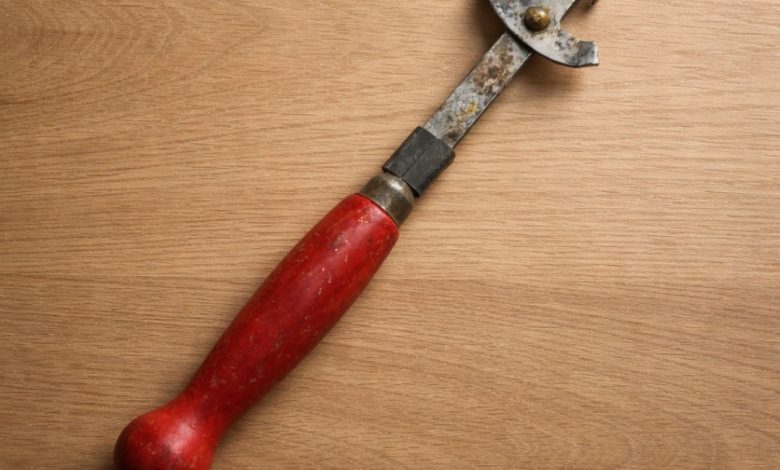
The Can Bottle Opener shown in the images is a vintage manual kitchen tool designed to open both tin cans and glass bottles. It reflects early mechanical ingenuity from a time before electric appliances became common in households.
Name and Common Variations
- Primary name: Can Bottle Opener
- Also known as:
- Combination Can and Bottle Opener
- Claw-Style Can Opener
- Manual Can & Crown Cap Opener
Time Period of Origin
- Introduced: Late 19th century
- Most common usage: Early to mid-20th century (approximately 1900s–1940s)
- Widely used before rotary wheel and electric can openers became standard.
Inventor and Development
- Early can-opening tools evolved after the invention of preserved tin cans in the 19th century.
- These tools were not created by a single inventor, but rather developed gradually by metalworkers and kitchenware manufacturers in Europe and North America.
- The design shown reflects improvements made after cans began to include soldered seams and thinner steel, making manual opening more practical.
Design and Construction
- Handle:
- Solid wooden handle, often painted red
- Ergonomic shape with a rounded end for grip
- Metal components:
- Forged steel or iron head
- Riveted construction
- Visible patina, oxidation, and wear consistent with age
- Functional head:
- Sharp hooked blade for puncturing and slicing can lids
- Integrated bottle-cap lever for crown caps
How It Works
- For cans:
- The pointed blade punctures the lid
- The curved edge slices around the rim manually
- For bottles:
- The hooked notch pries off metal crown caps
- Operated entirely by hand pressure and leverage
Primary Uses
- Opening tinned food cans
- Removing crown caps from glass bottles
- Commonly used in:
- Home kitchens
- Military field kits
- Camps and outdoor settings
- Early commercial food service
Historical Significance
- Represents an important step in the evolution of food preservation tools
- Enabled safer and faster access to canned goods
- Demonstrates early multi-function kitchen tool design
- Predecessor to modern rotary and electric can openers
Why It Matters Today
- Valued as a collectible antique kitchen tool
- Appreciated for its durability and craftsmanship
- Frequently displayed in:
- Vintage kitchen collections
- Culinary history exhibits
- Rustic or industrial décor