Snake or Not? A Strange Garden Discovery in Santa Fe, Argentina
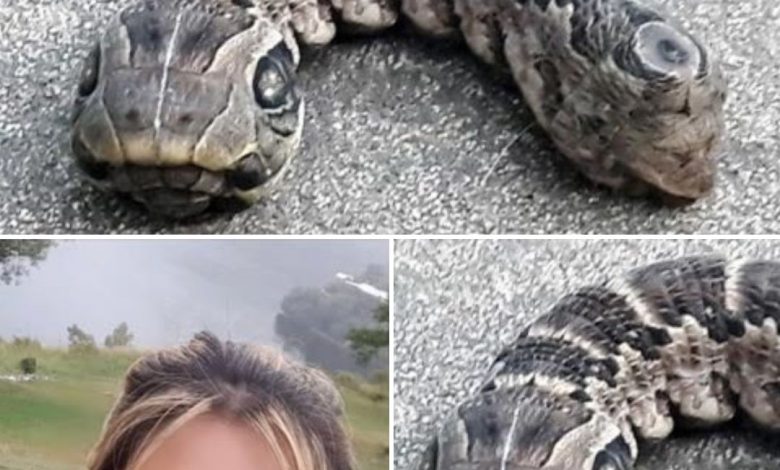
Where it happened
In the quiet town of Santa Fe, Argentina, 46-year-old Lujan Eroles had an alarming surprise in her garden.
What she thought she saw
Eroles initially believed she had found a snake, and her first reaction was immediate fear.
- She described the moment as so startling that she screamed.
- The creature looked like a snake and had unusual, “strange” eyes, which made it seem even more threatening.
- Because it looked potentially dangerous, she worried it might be poisonous.
What it actually was
After the video circulated online and people weighed in, the mysterious animal was identified as a snake-mimicking caterpillar.
- Size: about 10 centimeters long
- Identity: a caterpillar from a rare moth species (commonly compared by commenters to an elephant hawk-moth–type caterpillar)
- Key detail: it had large “eye markings” that made it look like a snake’s face
Why it looks like a snake
This caterpillar survives using mimicry, an adaptation where an animal imitates something more dangerous to avoid being eaten.
- It displays two big eye-like markings behind its head
- The markings trick predators into thinking:
- The caterpillar is much larger than it really is
- The caterpillar might be a snake—and therefore risky to attack
- Because it lacks strong defenses like venom or spines, looking dangerous is its best protection.
How the town and internet reacted
The discovery didn’t just surprise Eroles—it drew in others quickly.
- Neighbors gathered to see the creature up close
- Eroles filmed it and posted it online because:
- People were unsure what it was
- Some even suspected it was a “mutant” animal
- The footage gained attention fast, leading to widespread discussion and eventual identification.
What this encounter shows us
Eroles’ garden discovery highlights how the natural world can be both frightening and fascinating.
- Even small creatures can have ingenious survival strategies
- Mimicry is a powerful example of evolution in action
- Encounters like this remind us of the rich biodiversity that exists—even in ordinary places like a backyard.