Woke up to this red circle on my daughter’s arm. it’s spreading fast and she’s crying from the itch.
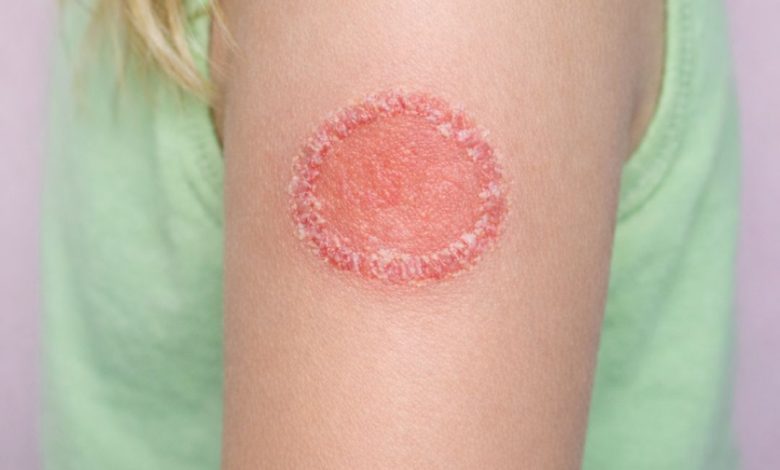
Seeing a red, spreading circle on your child’s skin can be unsettling, especially when the itching starts, the scratching won’t stop, and you are left wondering whether it is something mild or something that needs medical care. While ringworm is one common explanation, not every circular rash is ringworm, and the details matter.
Ringworm is caused by a fungus, not a worm. On the skin, it often shows up as an itchy, scaly, ring-shaped rash with a more noticeable border and a clearer-looking center. It is common in children and can spread through skin contact, shared towels or bedding, contaminated surfaces, and even pets.
When you first notice a rash like this, start with calm, basic care. Wash the area gently, pat it dry, keep the skin clean and dry, and trim your child’s nails to reduce damage from scratching. One thing parents should remember is this: do not use steroid cream on suspected ringworm, because it can make a fungal rash harder to control.
It also helps to know how ringworm differs from a few common look-alikes. Lyme disease can cause a circular rash too, but that rash typically expands gradually over days and is often warm rather than intensely itchy or painful. Hives are different because they usually appear as raised, very itchy welts that can change shape or move around. Eczema tends to cause dry, inflamed, itchy patches rather than one clean ring, and eczema is not contagious.
If the rash truly is ringworm on the body, an over-the-counter antifungal cream may help, especially for a single patch. Dermatology guidance notes that many antifungal creams are used twice a day for two to four weeks. But parents should not assume every rash should be treated at home forever. Call your child’s doctor if the rash keeps spreading, looks worse after about a week of treatment, or is still not gone after four weeks.
Some situations deserve quicker medical attention. If there are multiple patches, if the scalp is involved, or if hair is breaking or falling out, your child may need prescription treatment by mouth rather than cream alone. Scalp ringworm often requires oral antifungal medicine and sometimes a special shampoo, because creams usually are not enough for that area.
Parents also make a few common mistakes that allow ringworm to linger. The biggest ones are stopping treatment too early because the rash looks better after a few days, and using the wrong product, especially steroids, instead of an antifungal. For best results, the area should be kept dry and treatment should continue for as long as directed.
Because ringworm is contagious, home prevention matters. Do not let children share towels, clothing, bedding, brushes, or hats, and take a close look at pets if the rash seems to keep coming back. A pediatrician or dermatologist may diagnose the rash by examining it closely and, in some cases, by doing a skin scraping or sample test to confirm what is causing it.
The good news is that skin ringworm is usually manageable. In fact, according to pediatric guidance, children with ringworm on the skin often do not have to miss school, and after 48 hours of treatment, spread to others drops significantly. Still, families should follow school rules and keep the affected area covered when practical.
The most important takeaway is simple: a circular rash is not something to ignore, but it is not something to panic over either. Start with gentle care, watch the pattern closely, and get medical help if it spreads, lasts, involves the scalp, or just does not seem right. And if the rash is accompanied by mouth or throat swelling, trouble breathing, trouble swallowing, or vomiting with hives, seek emergency care immediately.
Roncrucial.com does not give medical advice, diagnosis, or treatment.