Solved: The “Caged” Device Above a Basement Outlet in an 1890s Home
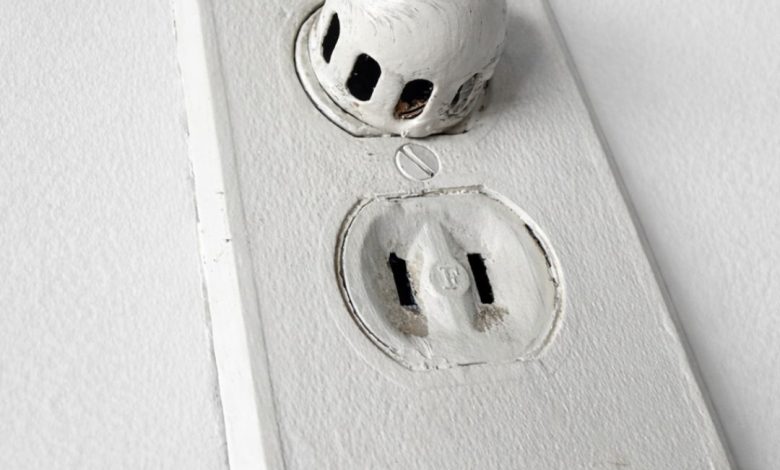
In many older homes, a small “dome” with openings mounted above a receptacle is not a vent or alarm. It is most commonly a pilot/indicator light assembly (sometimes paired with a switched outlet) used to show that a circuit is energized or that a connected light is on.
What You’re Looking At
- Top “dome/cage”: A protective cover that originally housed a tiny low-watt bulb (your inspection confirms this). The openings allow light to show while helping protect the bulb from bumps.
- Bottom receptacle: A painted-over older outlet (often two-prong in vintage installations). The paint and age can make it look unusual or “sealed,” but it’s a typical sign of many decades of repainting.
Most Likely Purpose
This setup was commonly installed to provide one or more of the following:
- Basement light indicator (“pilot light”)
- The small bulb would illuminate when the basement light circuit (or another controlled circuit) was on.
- Useful reminder: “Someone left the basement light on.”
- Nighttime wayfinding / locator light
- A very small bulb provided just enough light to find the door, steps, or switch in the dark without turning on overhead lighting.
- Switched or “controlled” outlet status
- In some homes, the outlet (or a portion of it) was controlled by a nearby switch.
- The pilot light would show when the outlet was hot/active.
- Equipment power indicator (sump pump, well pump, utility load)
- Some households used it to confirm that a critical device had power available (even if the device wasn’t running).
Why Homes Had This Feature (Especially Around Basements, Attics, and Closets)
- Safety and convenience: Basements and stair areas are easy places to forget lights or need a small guiding glow.
- Early “smart home” behavior: Before modern indicator switches and LED night lights, this was a practical way to show ON/OFF status at a glance.
What the Crowd Opinions Get Right
Many of the comments you collected converge on the same core idea:
- “Indicator light / pilot light” is the leading explanation.
- “Basement light is on” and “night light to see where you’re going” are both consistent with how these were commonly used.
- “Sump pump has power” is also plausible, depending on how it was wired.
Important Notes About Safety (Given the Age and Paint)
Because this appears to be an older electrical device that has been painted over, treat it cautiously:
- Paint on receptacles and covers can interfere with fit, grounding paths, and heat dissipation, and it often signals multiple layers of age and wear.
- Older outlets may be ungrounded or may not meet modern safety expectations.
- If you plan to use it (or restore it), it’s best to have an electrician confirm:
- What circuit it is on
- Whether it is switched
- Whether wiring insulation and connections are still sound
- Whether replacement with a modern, code-appropriate device is advisable
Practical Takeaway
Your “mystery dome” is very likely a vintage pilot/indicator light installed above an outlet so you could immediately tell when a basement (or utility) circuit was on, and in some cases to provide a small night locator light.