Do you have any idea what this could be?
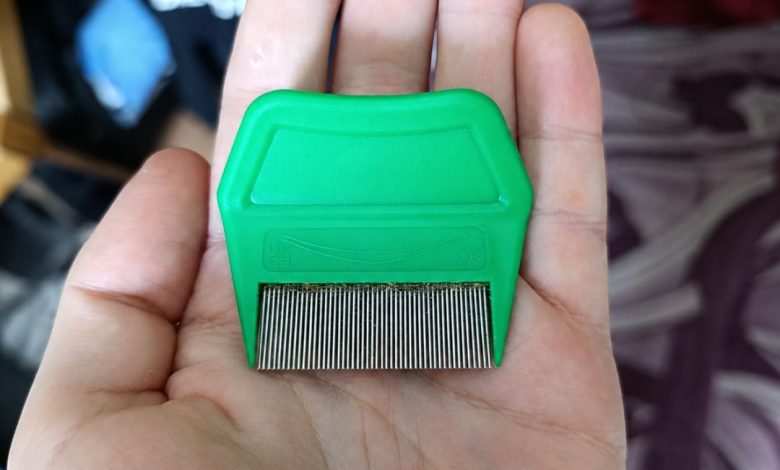
The object in the photos is a lice comb, also commonly called a nit comb. It is a small grooming tool with very fine, tightly spaced metal teeth. Unlike a regular hair comb, it is designed to catch and pull out head lice and nits, which are lice eggs attached to hair strands.
When did it first appear?
The lice comb is not a new invention. People have been dealing with lice for thousands of years. One famous archaeological example is an ivory lice comb from about 1700 BCE, found at Tel Lachish in modern-day Israel. Researchers identified it as a comb connected to lice removal, showing that this problem existed even in ancient times.
What is it used for?
A lice comb is used to physically remove lice and nits from the hair. The narrow metal teeth slide through the hair and help trap tiny insects and eggs that ordinary combs would miss. The CDC also recommends using nit combs to remove lice and nits from the hair shaft, especially after treatment.
How is it normally used?
In many homes, parents use this comb after applying a lice treatment or while the hair is wet and coated with conditioner. Wet combing can make the process easier because it slows the lice and helps the comb move through the hair. Mayo Clinic notes that a fine-toothed nit comb may remove lice and some nits when used on wet hair.
Why does it look this way?
The green plastic part is simply the handle, while the metal teeth do the real work. The teeth are extremely close together because lice and nits are very small. Some combs also have markings such as “This side toward scalp”, reminding users to place the comb close to the scalp, where nits are often attached near the roots of the hair.
A small but important tool
Although it looks simple, the lice comb remains one of the most practical tools for dealing with head lice. Its basic design has changed very little over time: a firm handle, fine teeth, and careful combing. The important truth is that it is not a magic cure by itself. It works best when used patiently and repeatedly as part of a proper lice-removal routine.