Saw this at an estate sale by the kitchen sink. It looks like a bar of soap but it’s made of solid metal and has no smell…
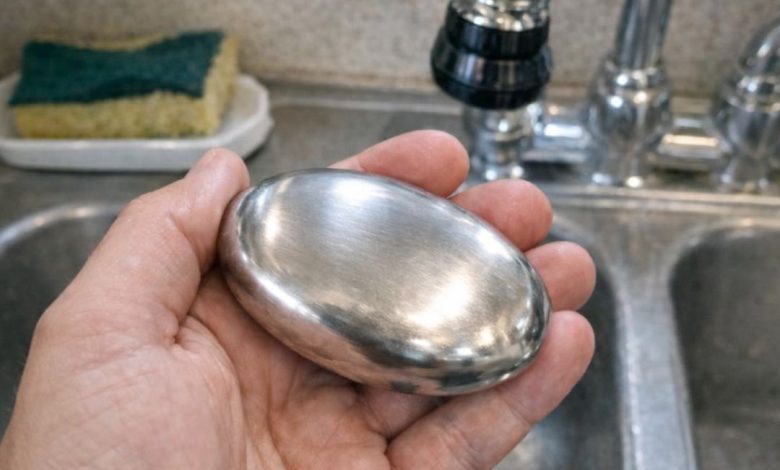
Estate sales are full of odd little discoveries—objects that look familiar at first, yet leave you wondering what they were actually used for. One item that often confuses people is a smooth, heavy piece of metal found near the kitchen sink. It looks a bit like a bar of soap, but it has no scent, no label, and no obvious purpose.
As strange as it may seem, this mystery object is usually a stainless steel odor remover bar. It is not decorative, and it is not a paperweight. It is a practical kitchen tool designed to help remove strong food odors from your hands after cooking.
A Soap Bar That Never Dissolves
At a glance, the object can easily be mistaken for a polished stone or a novelty sink accessory. Most are shaped to fit comfortably in the palm of your hand, with a smooth surface and rounded edges. Unlike a normal soap bar, however, it does not foam, melt, or wear down over time.
That is because it is made of solid stainless steel. Its entire purpose is to help neutralize stubborn smells left behind by foods such as garlic, onions, fish, shallots, and other sulfur-rich ingredients.
What a Stainless Steel Odor Remover Bar Actually Does
This kitchen gadget is meant to be used after food prep, especially when washing your hands with regular soap still leaves behind an unpleasant smell. Instead of masking odor with fragrance, the bar is believed to help reduce or neutralize odor-causing compounds when rubbed between wet hands under running water.
Many home cooks and professional chefs keep one by the sink because it is reusable, simple, and long-lasting. There are no chemicals inside, no batteries, and no maintenance required.
Why It Works on Garlic, Onion, and Fish Smells
The bar is most often associated with removing odors caused by sulfur compounds, which are common in ingredients like garlic and onions. These compounds tend to cling to the skin, especially around the fingertips and under the nails, which is why normal handwashing does not always solve the problem.
When you rub the stainless steel bar under water, it may help reduce those lingering smells. Whether you think of it as chemistry or just a useful kitchen trick, many people swear by it for tackling the kinds of odors that seem to follow you long after cooking is done.
How To Use It Correctly
Using it is easy. After handling pungent ingredients, wet your hands and the metal bar under cool running water. Then rub the bar all over your hands for about 20 to 30 seconds, just as you would with a regular soap bar.
Be sure to rub between your fingers, around your fingertips, and near your nails, since those areas tend to hold onto strong cooking odors the most. After that, rinse your hands again. Many people use the steel bar after washing first with regular soap, especially if the smell is especially strong.
The Kitchen Smells It Is Best Known For Removing
This tool is most commonly used for odors from:
Garlic
Onions
Fish and seafood
Shallots and leeks
Other strong-smelling foods handled during meal prep
It is especially useful for anyone who cooks often and gets tired of their hands smelling like the ingredients long after dinner is finished.
Why People Still Find These in Older Homes
One reason these metal bars show up so often at estate sales is that they were once a popular kitchen novelty that turned out to be surprisingly useful. Because they are made of durable metal and do not wear out easily, they can last for decades. That means they often remain tucked away near sinks, in kitchen drawers, or among old household items long after their original owners are gone.
In many ways, they reflect an older style of kitchen practicality: simple tools, no waste, and long-term usefulness.
How To Recognize One
If you come across a mystery metal object and suspect it might be an odor remover bar, there are a few clues. Most are smooth, compact, and shaped to fit the hand comfortably. They usually have no decorative features, no sharp edges, and no obvious moving parts.
Unlike many random metal blocks or hardware pieces, they look intentionally designed for repeated handling at the sink. If it feels like something you would hold while washing your hands, there is a good chance that is exactly what it is.
Do People Still Buy Them Today?
Yes. These bars are still sold online and in many kitchenware stores. They remain popular because they are inexpensive, reusable, and easy to keep by the sink. Many versions cost only a small amount, making them an easy kitchen add-on for anyone who regularly cooks with strong-smelling ingredients.
Some people do not even buy a dedicated bar—they simply rub their hands on a stainless steel spoon, faucet, or other smooth steel utensil under running water instead.
A Small Kitchen Tool With Lasting Appeal
So if you find a metal “soap” bar at an estate sale or in an older kitchen, you are probably not looking at a random chunk of steel. You are likely holding a stainless steel odor remover bar, a clever little tool made to help remove lingering food smells from your hands.
It may not look impressive, but in the kitchen, it can be surprisingly handy. And like many estate sale finds, its value is not in how flashy it looks—it is in the simple, practical job it was made to do.