Jerusalem’s Ancient Wall Gets a Major Historical Reassessment
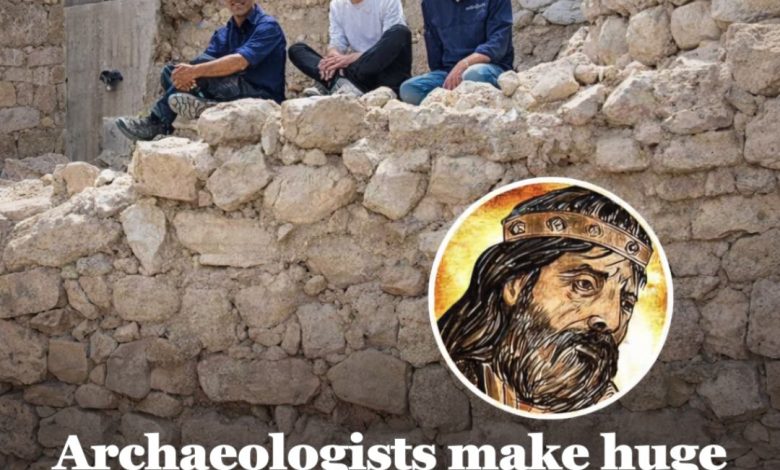
For many years, a central section of ancient Jerusalem’s wall was widely attributed to King Hezekiah of Judah, built as an urgent defense against the Assyrian Empire after the nearby Kingdom of Israel fell. However, nearly a decade of new research is reshaping that long-held narrative.
The latest findings argue that the wall’s origins likely belong to King Uzziah, Hezekiah’s great-grandfather, and that construction followed a major earthquake rather than an immediate Assyrian military threat.
What Scholars Used to Believe
Traditionally, historians linked the wall’s construction to:
- Hezekiah’s reign
- Preparations for conflict with Sennacherib of Assyria
- A defensive response to regional instability after Israel’s collapse
This view positioned the wall as part of a rapid militarized building effort driven primarily by external danger.

What the New Research Proposes
The new study suggests a different timeline and motivation:
- The wall’s earliest phase dates to just after the great earthquake referenced in biblical tradition
- The builder was likely King Uzziah
- The wall may reflect reconstruction and reinforcement after a natural disaster, not only wartime fortification
If correct, this requires a broader rewrite of Jerusalem’s defensive chronology and how researchers interpret the city’s development.
Biblical Texts and Archaeology: Where They Intersect
Researchers point to passages—especially from the Second Book of Chronicles—that describe Uzziah’s building activity, including:
- Fortification work
- Construction of towers at key strategic points
- Infrastructure improvements that match patterns found in archaeological investigation
The argument is not that the Bible alone “proves” the wall’s date, but that textual descriptions and physical evidence appear to align more closely than previously thought.

Carbon-14 Dating as the Scientific Anchor
A key part of the revised timeline comes from advanced carbon-14 dating, conducted through collaboration among:
- The Israel Antiquities Authority
- Tel Aviv University
- The Weizmann Institute of Science
To improve precision, researchers addressed a known difficulty: shifting atmospheric carbon levels during the period in question. They strengthened the dating model using comparative data from old European tree rings, improving calibration and narrowing the likely construction window.

What This Changes About Jerusalem’s Growth
Beyond “who built the wall,” the findings reshape the story of why Jerusalem expanded:
- Earlier narratives emphasized external pressures, such as population increases from refugees following Assyrian actions
- The new interpretation highlights internal Judean growth as a major driver of expansion
- This reframes Jerusalem as a city shaped strongly by local development and planning, not only emergency reactions to outside events
In practical terms, the research suggests Jerusalem’s expansion may have been slower, more organic, and more internally motivated than the older model implied.
Wider Historical Implications for Judah
The study’s significance extends beyond city walls:
- It strengthens the idea that the Kingdom of Judah adapted through repeated crises
- It contributes to broader debates about Judah’s place within ancient Near Eastern history
- It adds context for later upheavals, including the Babylonian siege and destruction

Why This Matters
This reassessment shows how historical understanding evolves when:
- Texts are reread with fresh questions
- Archaeological data is reanalyzed with improved methods
- Scientific dating tools become more accurate
Ultimately, the wall is becoming more than a monument—it is a case study in how evidence can revise timelines, challenge assumptions, and deepen understanding of how ancient Jerusalem developed its defenses and identity.