“Does anyone know what this is” I found it in a bag of kitchenware items at the secondhand store…
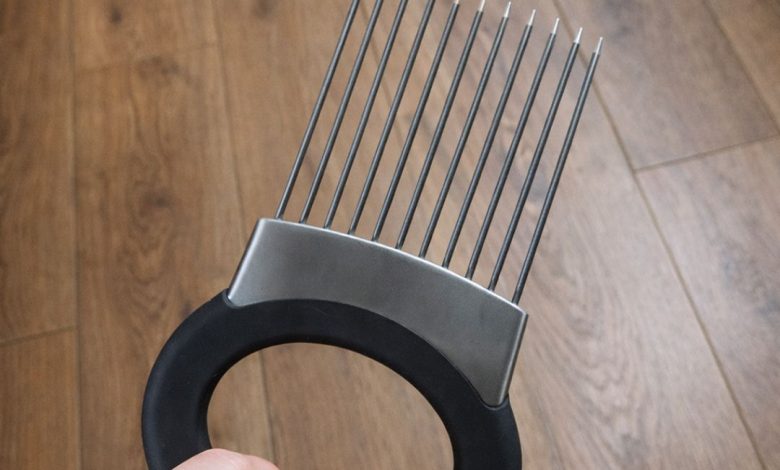
What It’s Called
This tool is commonly sold under a few names, including:
- Onion Holder
- Onion Holder Needle
- Onion Slicer Holder / Slicing Guide
- Vegetable Holding Fork
- Meat Slicing Holder
Despite the naming differences, the function is the same: a handle with multiple metal pins that anchor food in place while you cut.
What It Looks Like (Based on the Images)
- A curved black handle designed for grip
- A metal frame holding multiple parallel stainless-steel needles/pins
- Pins are long enough to pierce and stabilize foods like onion halves or meat

When It First Appeared
There isn’t one universally agreed “birth date” for the onion holder needle because it evolved from earlier kitchen tools. In practical terms:
- Similar multi-prong holding tools have existed for decades (inspired by carving forks and slicing aids).
- The modern “onion holder” gadget format became especially common with the growth of mass-produced home-kitchen accessories in the late 20th century into the early 2000s, when compact, specialized cutting helpers became widely marketed.
Who Created It
A single inventor is not consistently credited in mainstream product descriptions because:
- Many versions are generic or factory-produced designs
- Multiple manufacturers have produced near-identical models
- The concept is an iteration of earlier holding forks and slicing guides rather than one clearly branded invention
So, the most accurate way to describe authorship is: it is a widely manufactured kitchen accessory design, not a single-brand invention with one commonly cited creator.
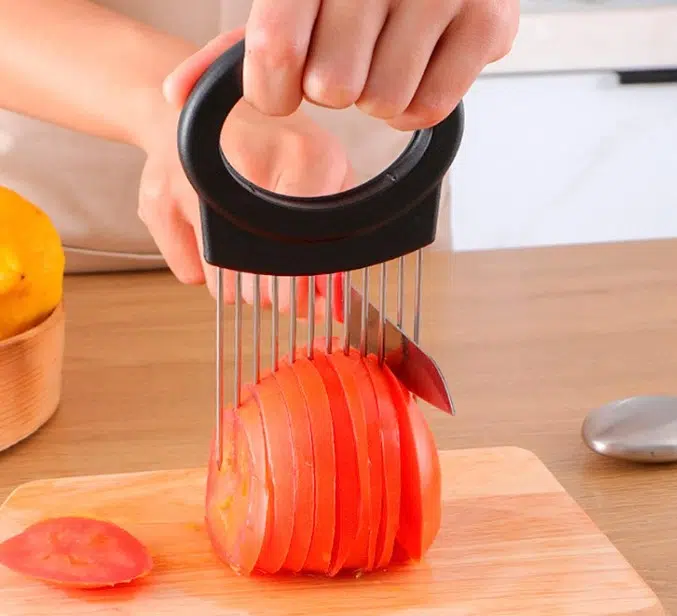
What It’s Used For (Core Purpose)
The onion holder needle is designed to:
- Hold slippery foods steady so your knife control improves
- Help make more even slices by keeping the ingredient from rolling or shifting
- Reduce the chance of cutting too close to your fingers
- Make slicing faster, easier, and more consistent
Common Foods It Works With
- Onions (especially halves for slicing)
- Potatoes (for stable slicing before dicing)
- Other firm fruits/vegetables (e.g., tomatoes that are not overly soft, apples, pears)
- Meat cuts (as shown in the image, helpful for slicing cooked or partially frozen meat more evenly)
How It Works (Simple Steps)
- Place the food on a cutting board.
- Press the pins straight down to anchor it.
- Slice with a knife between the pins.
- Lift the holder to reposition as needed.

Key Benefits (Why People Buy It)
- More uniform slices with less effort
- Improved safety: keeps your holding hand farther from the blade
- Better speed and control for meal prep
- Useful for beginners and also for anyone who wants consistent presentation
Limitations to Know
- Very soft foods can tear rather than slice cleanly
- Pins must be cleaned carefully (food can lodge between needles)
- Not a substitute for proper knife technique—just a helpful stabilizer