It’s too small for a regular towel or toilet paper. Any idea what it is?
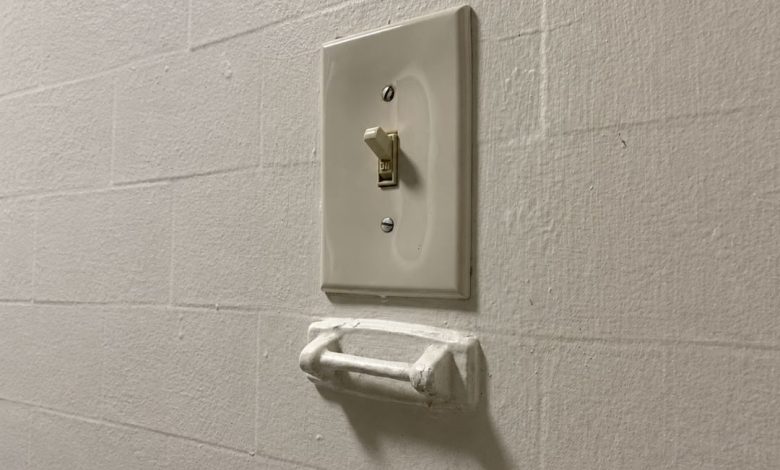
In many older American homes, especially houses built from the early 1900s through the 1940s, homeowners sometimes notice a small metal or ceramic hook mounted on the bathroom wall. At first glance, it can seem confusing. The hook is usually too small to hold a towel, oddly placed for toilet paper, and too sturdy to be purely decorative.
But this little fixture once had a very practical purpose. In many cases, it was originally a shaving strop hook.
A Tool From the Age of Straight Razors
Before electric razors and disposable cartridge razors became common, many men shaved with straight razors. These razors required regular care. A straight razor had to stay extremely sharp, and one of the most important tools for maintaining it was a leather shaving strop.
A strop was a long strip of leather used to smooth and refine the razor’s edge before shaving. One end of the strop was held by hand, while the other end was attached to a small hook on the wall. By pulling the leather tight, the user created the right amount of tension to move the razor back and forth across the surface.
This process helped keep the blade ready for a clean, close shave.
The Hook Was Placed There for a Reason
These hooks were not installed randomly. They were often placed around waist height, usually near a mirror, sink, or light switch. That location made sense because shaving was usually done in front of a mirror, with access to good lighting and water.
The hook allowed a man to attach the strop securely while preparing his razor. After stropping the blade, he could shave, rinse his face, and continue his morning routine.
What may look strange today was once a normal part of everyday life.
Built to Last
Many of these hooks were made from ceramic, cast iron, or other durable materials. They were designed to handle regular use, not just decoration. Over time, as shaving habits changed, the hooks were no longer needed. But because they were firmly attached to the wall, many were simply left in place.
In some homes, these hooks were painted over again and again during renovations. Layers of paint may now cover them, making them even harder to identify.
A Small Reminder of a Slower Daily Routine
Shaving used to be a more careful and deliberate process. Men often used hot water, towels, shaving soap, a brush, a straight razor, and a leather strop. It was not as quick as grabbing a disposable razor or using an electric shaver.
The small hook on the wall was part of that routine. It represented a time when personal grooming involved skill, patience, and maintenance. Tools were cleaned, sharpened, repaired, and reused instead of quickly thrown away.
Why Many People Don’t Recognize Them Today
Today, most people no longer use straight razors in the traditional way. Because of that, the original purpose of these hooks has mostly been forgotten. New homeowners may mistake them for old towel hooks, toilet paper holders, or random hardware left behind by previous owners.
But for those who know their history, the hook tells a story. It is a small detail from a different era of American home life.
More Than Just an Old Hook
That tiny hook in an old bathroom may seem insignificant, but it once served an important daily function. It helped hold a shaving strop, which helped maintain a straight razor, which was a regular part of men’s grooming for generations.
The old shaving strop hook is a quiet reminder of a time when household tools were practical, durable, and made to be used with care. It may be small, but it carries a piece of history right there on the bathroom wall.