Found this hard, foam-like brown structure attached to a fence post in the backyard. I was about to scrape it off but hesitated.
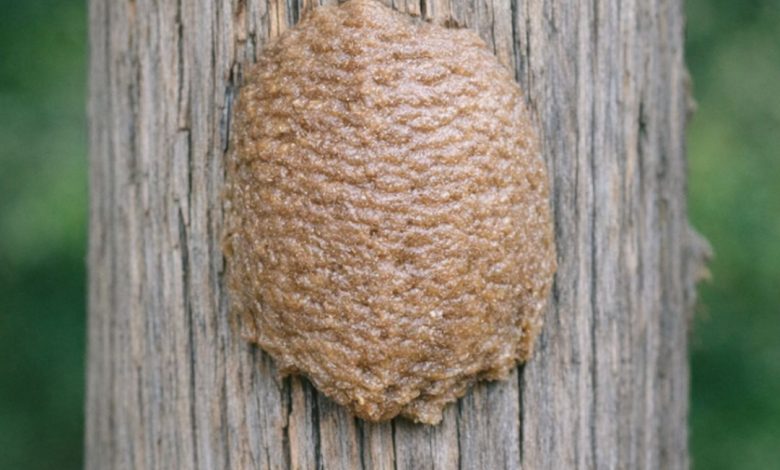
Finding a strange object in your backyard can be unsettling, especially when it looks like a hard, brown clump of foam stuck to a fence post, branch, or garden structure. At first glance, many people assume it is something dangerous, such as a wasp nest, a cocoon, or even a fungus. In many cases, however, this unusual structure is actually a praying mantis egg case, also called an ootheca.
This small natural capsule plays an important role in the life cycle of one of the garden’s most fascinating predators. Before removing it, it helps to understand what it is, why it matters, and why leaving it alone is often the best choice.
What Is a Praying Mantis Egg Case?
A praying mantis egg case is a protective structure created by a female mantis after mating, usually in late summer or fall. She releases a frothy substance that quickly hardens around her eggs, forming a durable shell that can survive through winter. The finished case is usually tan to light brown, firm, slightly spongy, and about 1 to 2 inches long.
Its rough, foam-like appearance often surprises homeowners. Because of its odd texture and shape, it is easy to mistake for something harmful. In reality, it is simply nature’s way of protecting the next generation of mantises until warmer weather arrives.
Why This Backyard Find Looks So Strange
One reason people stop in their tracks when they see an ootheca is because it does not look like a typical insect nest. It is not papery like a wasp nest, and it does not look soft or fuzzy like mold or fungus. Instead, it appears as a dense, sculpted mass with ridges or grooves, almost as if it were sprayed on and left to harden.
That unusual design is not accidental. The case is built to shield the eggs from cold, rain, predators, and sudden weather changes. What may look odd or even unpleasant to us is actually a remarkable survival tool.
The Insect Behind It: A Valuable Garden Predator
Praying mantises are well known for their long bodies, triangular heads, and folded front legs that give them their “praying” posture. They are also skilled hunters that feed on many insects found in yards and gardens, including flies, moths, crickets, and other small bugs.
Because of this, many gardeners are glad to have mantises nearby. These insects help reduce pest populations naturally, making them a helpful part of a balanced backyard ecosystem. Spotting an egg case means your yard may already be supporting beneficial insect life.
Where You’re Most Likely to Find One
Mantis egg cases are commonly attached to twigs, shrubs, tall stems, fence posts, outdoor furniture, and other sturdy surfaces. Females tend to place them in spots that offer some protection while still allowing the young mantises easy access to nearby vegetation when they hatch.
If you look closely around your yard during fall, winter, or early spring, you may notice more than one. They often blend into natural surroundings, which helps keep them hidden from predators.
Is It Dangerous?
For most people, the answer is no. A praying mantis egg case is harmless to humans and pets. It does not sting, bite, or spread disease. It simply holds dormant eggs until the right season arrives.
That is why experts and experienced gardeners generally recommend not scraping it off or crushing it. Destroying the case means killing a future generation of helpful insects before they ever have a chance to hatch.
What’s Inside the Case?
Inside one ootheca are dozens or even hundreds of developing mantis eggs. The hard outer shell protects them through the colder months. When temperatures rise in spring, tiny mantises begin emerging from narrow openings in the case.
These young mantises look like miniature versions of the adults. They are small, delicate, and quick to scatter into nearby plants, where they begin hunting almost immediately. Even at a young age, they are natural predators.
When Do They Hatch?
Praying mantis egg cases usually hatch in spring, once the weather becomes warm enough and food sources become more available. This timing is important because newly hatched mantises need a steady supply of tiny insects to survive.
If you are lucky enough to witness the hatching, you may see many tiny, pale mantises crawling out at once before spreading into the garden. It is one of the more fascinating natural events a homeowner can observe in an ordinary backyard.
Should You Move It?
In most situations, the best choice is to leave the egg case where it is. But if it is attached to something that will be removed, trimmed, or disturbed, careful relocation is possible.
The safest method is to cut the small branch or twig it is attached to, rather than trying to pry the case off directly. Then secure that twig upright in a sheltered part of the yard, such as inside a shrub or against a protected fence area. Keeping it stable and undamaged gives the eggs the best chance of hatching successfully.
Why Gardeners Appreciate Praying Mantises
Gardeners often see praying mantises as a welcome sight because they provide natural pest control. While they are not selective and may eat a wide variety of insects, their presence can still be beneficial in reducing some of the bugs that damage plants.
Beyond their usefulness, mantises are also simply fascinating to watch. Their slow, swaying movements, alert posture, and hunting behavior make them one of the most interesting insects in the yard. An egg case is not just a strange object on a post. It is the beginning of that story.
How to Tell It Apart From Wasp Nests or Fungi
People commonly confuse mantis egg cases with other backyard growths. A wasp nest is usually made of papery material and often shows visible openings or a layered pattern. Fungi tend to look softer, wetter, or more irregular in shape.
A mantis ootheca, by contrast, is usually compact, foam-like, ridged, and firmly attached. Once you know what to look for, it becomes much easier to recognize.
A Great Backyard Science Moment
What first looks gross or mysterious can quickly become something educational. For children and adults alike, discovering a mantis egg case can be a great way to learn more about insect life, seasonal change, and the role predators play in a healthy yard.
Instead of removing it out of fear, consider observing it over time. Watching for changes and waiting to see whether it hatches can turn a strange backyard discovery into a memorable science lesson.
So before you scrape off that odd brown lump, take a second look. It may be a praying mantis egg case — a harmless, protective nursery filled with future garden predators that can help keep your backyard ecosystem in balance.