Who Remembers These Baby Seats?
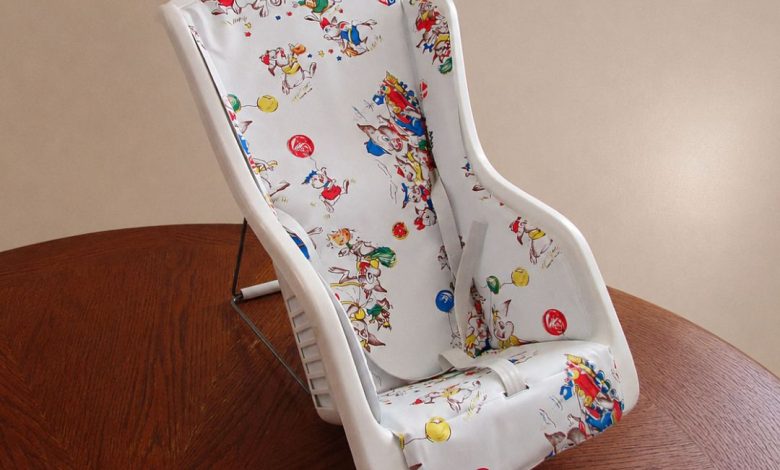
For many Americans who grew up in the 1950s, 1960s, and 1970s, this little seat brings back an instant memory: a baby propped up in the kitchen, on the floor near Mom, or sometimes even riding along in the family car. The item in the photo is commonly remembered as a vintage baby seat, infant seat, or, in some cases, an early-style baby car seat.
The exact brand of the seat in the photo cannot be confirmed from the image alone, but its shape, padded vinyl cover, metal support frame, and cheerful cartoon print are typical of mid-century baby gear. Collectors often connect this style with Kantwet-type reclining infant seats and other baby seats sold during the early 1970s. One vintage car-seat collection article specifically mentions a 1974 Kantwet reclining seat with a metal frame and patterned fabric.
What Was It Called?
Most families simply called it a baby seat. Depending on the model, stores might have advertised it as an infant seat, reclining baby seat, portable baby chair, or car baby seat. Some were made mainly for use around the house, while others were marketed for automobile use before modern child passenger safety rules became strict.
When Did These Baby Seats Become Popular?
Seats like this became especially common in American homes from the 1950s through the 1970s. Early child car seats existed as far back as the 1930s, but many of those early designs were not created primarily for crash protection. Their main purpose was to keep a child in one place, lift the child up, and make travel more convenient for parents. Safety-focused child restraint designs became more important during the 1960s, and federal child-seat safety standards began developing in the early 1970s.
What Was It Used For?
The main purpose of this seat was convenience. Parents used it to keep a baby slightly upright while they cooked, cleaned, folded laundry, or fed the child. A baby could sit in it and watch the family instead of lying flat in a crib or bassinet. The slanted back helped support the infant, while the metal frame kept the seat propped at an angle.
For many families, it was part of everyday life. It might sit on the kitchen table, the living room floor, or beside a parent’s chair. In an era before today’s bouncers, swings, carriers, and highly engineered infant seats, this simple chair felt practical and modern.
Why Do People Remember It So Fondly?
These seats remind many Baby Boomers and Gen X Americans of a very specific time in family life. The printed vinyl, the lightweight frame, and the simple design all feel unmistakably old-fashioned now. They belonged to a period when baby products were colorful, practical, and often used for several children in the same family.
But the unspoken truth is important: nostalgia does not mean the item is safe by today’s standards. Many vintage baby seats did not have the harness systems, crash testing, side-impact protection, or installation requirements expected from modern car seats. Today, the National Highway Traffic Safety Administration says parents should choose a car seat based on a child’s age and size, install it correctly, use it every ride, and keep children in the back seat at least through age 12.
A Small Seat With a Big Memory
This vintage baby seat is more than an old piece of nursery gear. It is a snapshot of American parenting before modern child-safety technology changed everything. To people who remember it, it may bring back kitchens with patterned linoleum, station wagons in the driveway, and babies sitting nearby while the family went about the day.
It was simple, colorful, and useful — a familiar little seat from a very different era of American childhood.