Why not just make it straight, it’s faster, and why does it have to turn first?
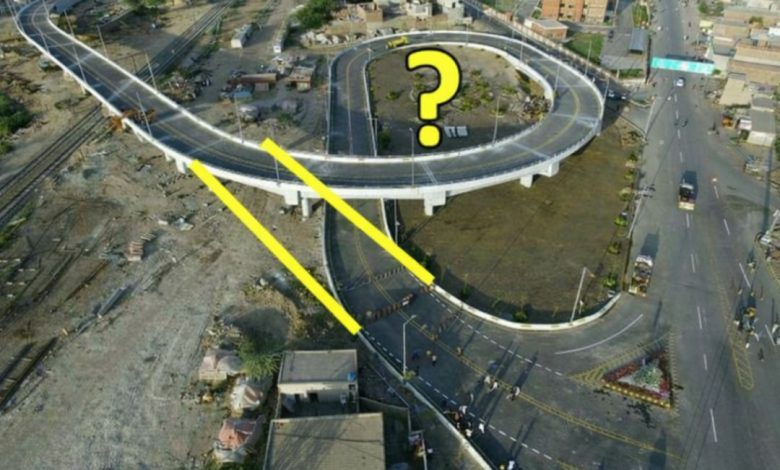
A widely shared meme image shows an elevated roadway (a flyover) that appears to take a long, looping route instead of connecting directly to the road below. With a big question mark over the structure and a frustrated “Why?” reaction, the photo highlights a common public concern: when road design looks inefficient, people assume it must be pointless. In reality, a flyover’s shape is often driven by constraints that are not obvious from a single aerial snapshot.
What the Image Shows
- An elevated ramp/flyover that curves into a large loop.
- Yellow lines drawn across the scene suggest a shorter “straight” path that many viewers think the road should have taken.
- The surrounding area includes multiple roadways, open land, and likely existing corridors (such as rail lines or utility paths), which can heavily influence layout.
Why Engineers Might Build a Loop Instead of a Straight Connection
Roads are not drawn like lines on paper. They must meet safety standards, fit the land, and work with existing infrastructure. Common reasons include:
- Right-of-Way and Land Constraints
- The “straight” route may cut through private property, protected land, buildings, or facilities.
- Avoiding land acquisition can reduce legal disputes, relocation costs, and project delays.
- Crossing Major Obstacles (Rail Lines, Canals, Highways, Utilities)
- A direct connection might require crossing a rail corridor, drainage canal, or high-speed roadway at an unsafe angle.
- Loops can position the bridge where supports (piers) can be safely placed without interfering with what’s below.
- Turning Radius and Safety Requirements
- Elevated ramps must maintain a safe turning radius based on design speed.
- A tight curve can increase rollover risk, reduce driver reaction time, and worsen crash severity—especially for buses and trucks.
- A longer loop allows a gentler curve and safer operation.
- Slope, Elevation, and Comfort
- Flyovers must limit grade (slope) so vehicles can climb safely without stalling or losing control in wet conditions.
- A longer path provides more distance to gain height gradually, keeping the ramp comfortable and compliant.
- Traffic Flow and Conflict Reduction
- A “straight” ramp might force dangerous weaving where vehicles merge and exit in a short space.
- A loop can separate movements so drivers have clearer merging points, reducing collisions and bottlenecks.
- Construction Practicality and Cost Control
- The shortest path is not always the cheapest to build.
- A direct bridge might require longer spans, complex foundations, or relocating utilities—often far more expensive than a longer but simpler curve.
What This Kind of Design Can Cause (Good and Bad)
- Potential benefits
- Fewer conflict points and safer merging
- Better compliance with radius and slope standards
- Reduced disruption to rail/road corridors below
- Common drawbacks
- Longer travel distance and more fuel use
- Driver frustration and confusion if signage is poor
- Higher perceived inefficiency, which can damage public trust even if the design is justified
How to Judge Whether It’s Actually “Bad Design”
A single photo can be misleading. A fair evaluation usually considers:
- Traffic volumes (does the ramp remove a major bottleneck?)
- Crash history (does it reduce dangerous turning or crossing?)
- Land and obstacle maps (what was impossible to build through?)
- Design standards (radius, slope, visibility, merge length)
- Total lifecycle cost (construction + maintenance + safety outcomes)
Common Improvements If a Loop Truly Causes Problems
- Clear lane markings and advance signage to prevent sudden braking or missed exits
- Lighting and reflective guidance for night driving
- Speed management (advisory speeds, rumble strips where appropriate)
- Better connections for local traffic (service roads, slip lanes)
- Future upgrades such as a more direct ramp if land becomes available later
Key Takeaways
- The “obvious straight line” is often blocked by land ownership, safety geometry, slope limits, or existing corridors.
- A loop can be an intentional compromise to deliver safer merges, gentler curves, and easier construction.