What is this bow and arrow on my 20?
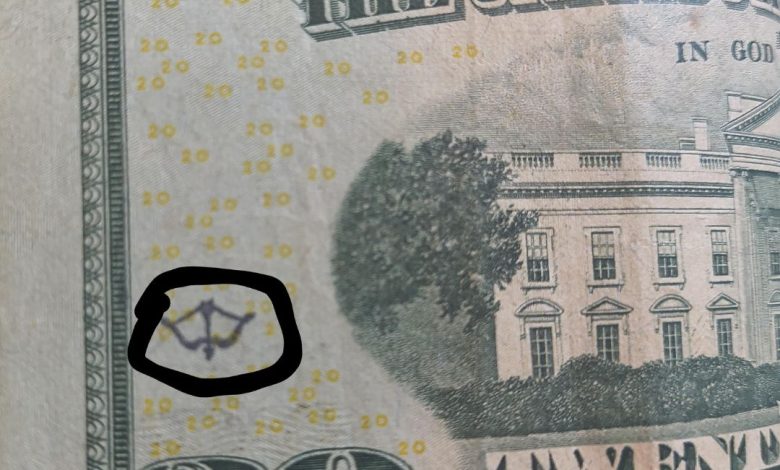
If you have ever spotted a tiny stamp, set of initials, or unusual symbol on a U.S. dollar bill, you may have wondered whether it was damaged, counterfeit, or part of some secret code. In many cases, those markings are known as chop marks — small stamps added by money changers and currency handlers in different parts of the world.
These marks are not part of the bill’s original design. Instead, they are a sign that the note was checked and accepted as genuine during its circulation overseas. In regions where counterfeit cash is a bigger concern, chop marks can serve as a quick, visible form of reassurance.

What are chop marks?
Chop marks are small ink stamps or symbols placed on paper currency after someone in the exchange chain verifies that the bill is authentic. They are most commonly seen in places such as Southeast Asia, parts of Africa, and Latin America, where U.S. dollars are widely used in everyday trade, savings, or informal transactions.
The practice has deep historical roots. The term “chop” is linked to older traditions in Asia, especially China, where merchants once stamped silver coins to confirm their weight and purity. Over time, that habit carried over to paper money, particularly the U.S. dollar, which has long been trusted far beyond America’s borders.
Why do money changers stamp bills?
These markings are usually added only after a bill passes a basic authenticity check. A currency handler may use a personal symbol, initials, or a small icon to show that the note has already been inspected. That helps:

Confirm the bill is believed to be real
Track its movement through local exchange networks
Build confidence in places where formal verification systems may be limited
Because of this, a marked bill can reflect something much bigger than its face value. It may show that the note has passed through street markets, exchange booths, border towns, banks, or trading hubs in multiple countries.
What do chop marks look like?
They can appear in many forms, including:
Stars, arrows, birds, or other simple symbols
Initials or stylized letters
Small custom stamps used by a specific handler or business
Most are applied in blue, black, or red ink, often kept small enough so they do not cover key design details or major security features on the note.

Are chop marks legal in the United States?
In general, small chop marks do not make a dollar bill illegal or worthless. U.S. law prohibits damaging currency in a way that destroys or reduces its value as legal tender, but these tiny stamps usually do not go that far. A bill with one or two minor marks can still be spent.
That said, heavily marked or defaced bills may sometimes be rejected by vending machines, banks, or cash-handling systems that rely on appearance and condition.
A small mark with a global story
A chop-marked dollar bill is more than just cash with ink on it. It can be a quiet reminder that American currency often travels far beyond U.S. borders. One small stamp may represent verification, trust, and movement through international markets.
So the next time you find a dollar bill with an odd little symbol on it, you may be holding a tiny piece of global financial history right in your wallet.