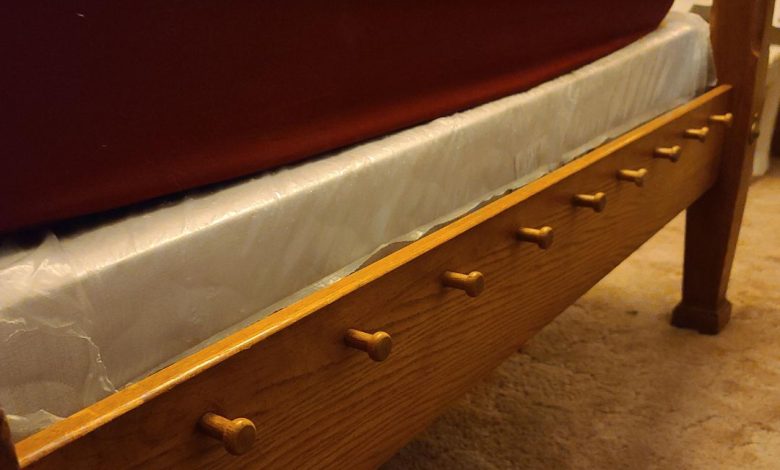
What are these pegs at the end of my bed used for?
Rope Beds: The Original “Sleep Tight” Technology
Imagine coming home exhausted late at night — not to a plush memory foam mattress, but to a bed made of rope. Yes, rope. It may sound primitive by today’s standards, yet for centuries, this design represented practical engineering at its best.
One might easily mistake a rope bed for a stage prop from a medieval play. But once you understand how it worked, its ingenuity becomes clear.
The First Sleep Support System
Before metal coils and synthetic foam, beds were built with a sturdy wooden frame interlaced with tightly woven ropes. On top of this grid rested a mattress stuffed with straw, wool, or feathers. The structure was simple — yet remarkably effective.
However, ropes naturally stretch. After several nights of use — or perhaps a child bouncing on it — the bed could begin to sag, turning into something closer to a hammock.
The solution? Wooden pegs inserted into the bed frame. By turning these pegs, sleepers could manually tighten the rope lattice, restoring firmness and support.
This is widely believed to be the origin of the phrase “sleep tight.” Before going to bed, you literally tightened the ropes to ensure a stable night’s rest.

Daily Maintenance Was Normal
Furniture in earlier centuries wasn’t disposable. If a rope bed sagged, you didn’t replace it — you maintained it. Tightening the ropes became routine household upkeep.
This mindset reflected a broader philosophy:
Repair instead of replace. Maintain instead of discard.

Handcrafted by Local Carpenters
Rope beds were not factory products. They were handmade by local craftsmen, often the same carpenter who built fences, cabinets, or doors in the community.
Because they were built from solid wood and basic materials, they were:
- Repairable
- Durable
- Meant to be passed down through generations
No warranties were needed. If something broke, it could be fixed.

Still Found Today
Even now, rope beds occasionally appear in historic inns, farmhouses, and antique guest rooms. Some are restored for display; others remain fully functional.
Their continued presence is a testament to their craftsmanship. The design may be old, but it still works.
Simple Components, Smart Engineering
A rope bed required only:
- Wood
- Rope
- A few wooden pegs
Nothing more.
Yet this minimalist construction solved a genuine problem: preventing mattress sagging without metal springs, electricity, or modern materials.
In this context, “sleep tight” wasn’t originally a charming bedtime phrase — it was practical instruction.
Tighten the ropes.
Then sleep.