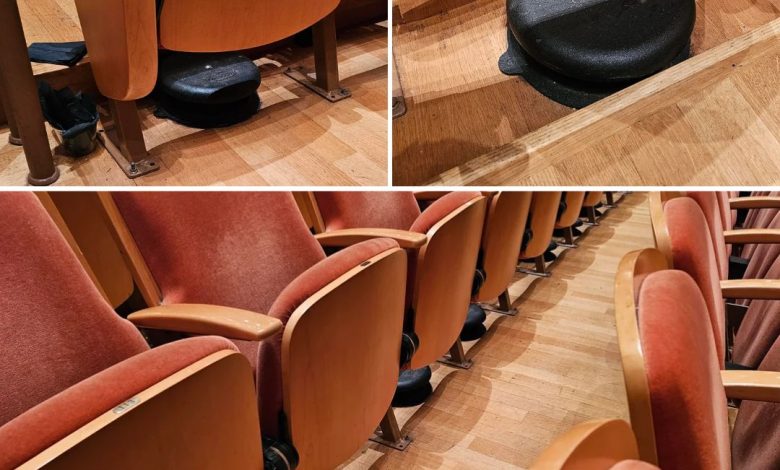
What are these metal discs under many seats at a concert hall?
A Hot Summer, a Packed Theater, and One Big Problem
Imagine being stuck in a crowded theater on a scorching summer day—no modern AC, no relief, just heat and still air. It’s easy to think air conditioning was the first real solution. But many early 20th-century theaters already had a surprisingly effective way to keep audiences comfortable.
If you’ve ever noticed a round cast-iron vent under an old theater seat, you’ve seen a leftover piece of that forgotten system—an early form of forced-air cooling that relied on ice, fans, and smart ventilation.
A Cool Idea Before the AC Era
Before air conditioning became widespread, theater owners had a business problem: hot rooms drive customers away, especially in summer. Instead of shutting down or accepting empty seats, many theaters used a practical cooling setup that worked like this:
- Huge blocks of ice were stored in the theater’s basement or cellar
- Large electric fans blew air across the ice, chilling the airflow
- That cooled air was pushed upward through ducts and floor vents
- The air emerged through vents positioned beneath seats, cooling people from the ground up
This system wasn’t precise like a modern thermostat, but it could still make theaters feel noticeably cooler—often described as some of the most comfortable places in town during heat waves.
The Vents That Still Exist Today
Those vents weren’t decoration. They were the final delivery point in a cooling chain that started underground. During summer seasons, staff would typically bring in fresh ice regularly to keep the system running.
Many historic theaters still have their original vents:
- Cast-iron, often circular (sometimes rectangular)
- Placed under seats or along the floor
- Easy to overlook or mistake for odd hardware
The effect was simple but powerful: cool air rose gently around audience members’ feet and legs, making the room feel far more bearable even on warm nights.
Why This System Changed the Theater Experience
In a time when homes and workplaces could become miserable in summer, the theater wasn’t just entertainment—it was relief. A cool auditorium became a kind of public refuge where people could sit comfortably for hours.
That comfort had a real impact:
- People were more willing to stay longer
- More visitors meant higher ticket sales
- Theaters became a popular summer destination, not something to avoid
In other words, early cooling didn’t just make moviegoing nicer—it helped make it a stronger habit and a bigger part of summer culture.
Echoes of a Clever Past
Walk into a restored historic theater today and you’ll notice the obvious beauty: ornate woodwork, velvet curtains, balconies, and classic architecture. But one of the smartest features might be the easiest to miss.
That small vent beneath your seat is a reminder that innovation doesn’t always start with advanced technology. Sometimes it starts with ice, airflow, and a well-designed plan—proof that a little ingenuity can change how an entire space feels.