Vial found inside the walls in the kitchen of my parents’ 1886 New England home
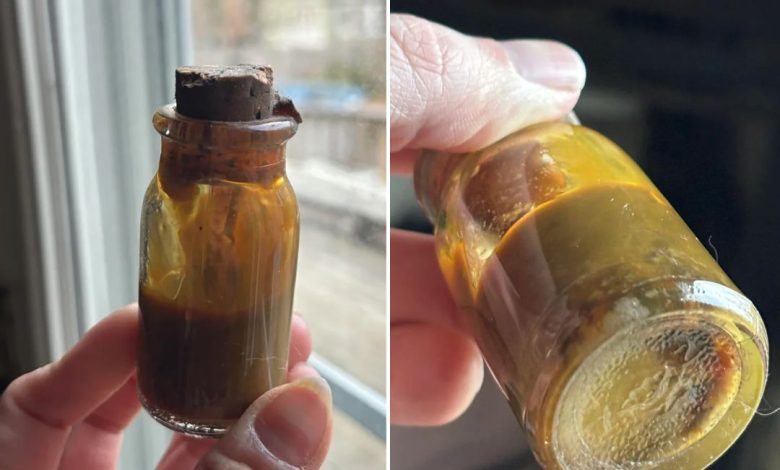
This small bottle appears to be an antique glass glue bottle with a cork top and a cotton wire swab applicator. Based on the description and the images, it likely dates to the late 1800s to the early 1900s, a time when many household and office products were stored in reusable glass containers instead of plastic ones.
The bottle is made of clear or amber-tinted glass, which helped protect the contents and made the container sturdy enough for repeated use. The cork stopper sealed the bottle, while the attached wire with a cotton tip worked like an early applicator. This simple design allowed a person to dip the swab into the liquid glue and spread a small amount where needed.

Its main purpose was to hold and apply glue for everyday tasks. People may have used bottles like this for paper repairs, sealing envelopes, attaching labels, crafts, book mending, or small household fixes. The swab made it easier to control the glue and avoid spills, which was useful at a time when adhesives were commonly sold in liquid form.
What makes this item especially interesting is its practical design and age. Today, glue usually comes in plastic squeeze bottles, glue sticks, or tubes. But in the past, a bottle like this was a simple and reusable tool that reflected how people handled everyday repairs and office work.
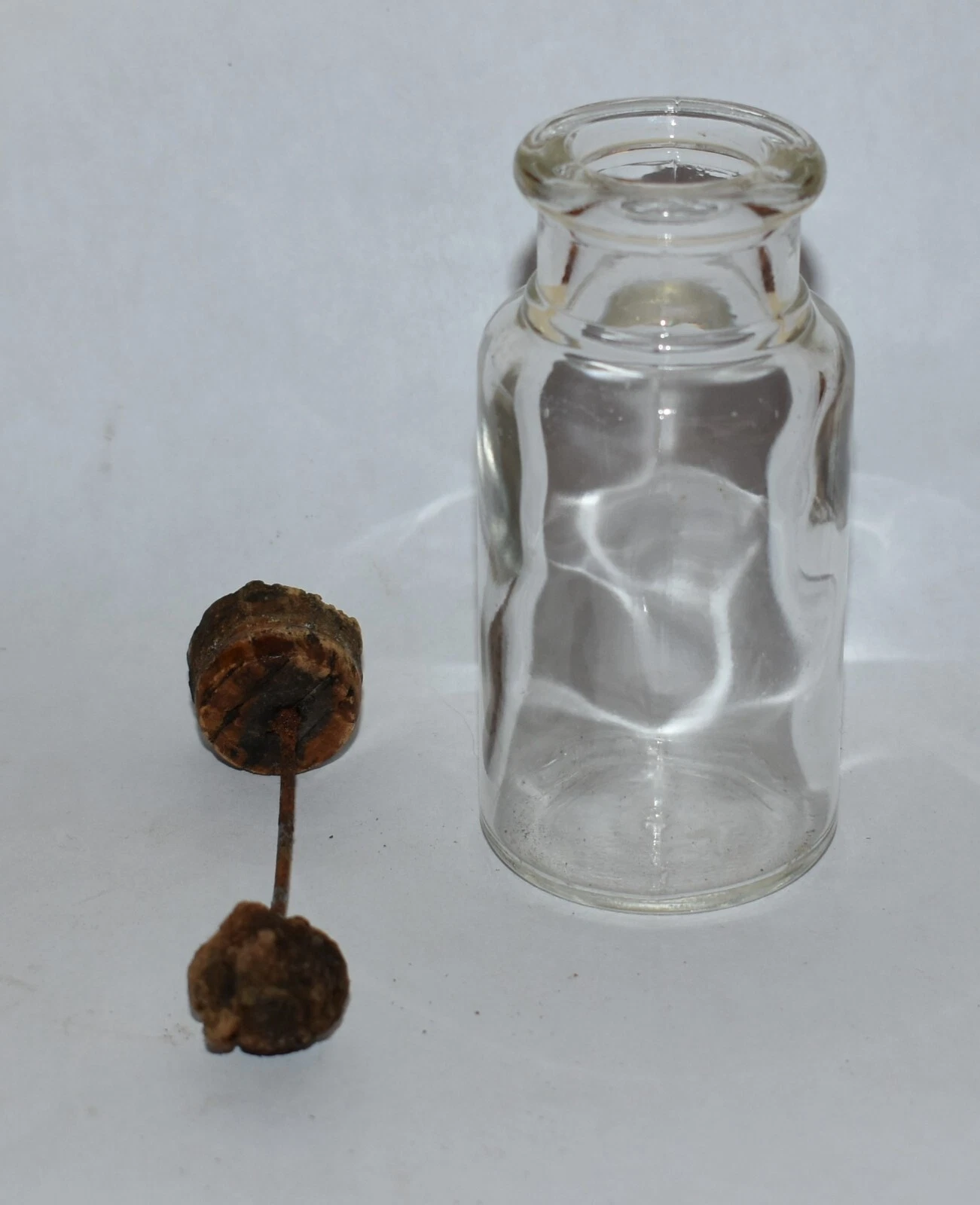
Because of its form, materials, and construction, this piece is best understood as a functional antique glue bottle from around the turn of the 20th century. It offers a small but fascinating look into daily life, household tools, and packaging from more than 100 years ago.