This mystery item is from my grandmother’s junk drawer. Any ideas on what this could be?
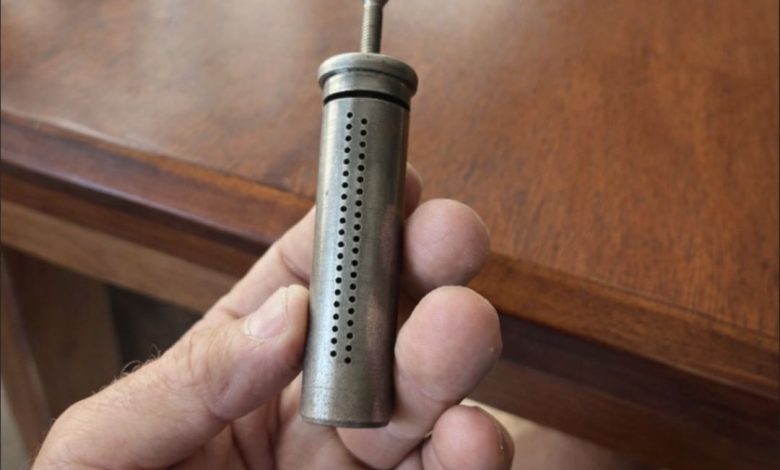
At first glance, it looks like a small metal tube with tiny holes and a button or plunger on top. But this simple gadget is actually a classic piece of American thrift culture: the Vintage “Little Gem” Dime Bank—sometimes described as a metal dime-holding bank, antique dime bank, or coin counter change holder.
These banks were designed for one purpose: helping everyday people save small change—especially dimes—and track their progress automatically.

What it’s called
Collectors and sellers most often refer to it as the “Little Gem Bank” or “Little Gem” Dime Bank. It’s also commonly listed under names like:
- Vintage Dime Bank
- Metal Dime Holding Bank
- Antique Coin Counter Bank
- Change Holder / Coin Counter Tube
Many examples feature the famous thrift slogan: “BE THRIFTY, SAVE A DIME DAILY.” That message wasn’t just decoration—it was the whole philosophy behind the product.
When it first appeared
Dime banks like this became popular in the United States during the late 1800s into the early 1900s, when saving coins was strongly promoted at home, in schools, and through community “thrift” campaigns. The exact production year can vary by maker and model, but most “Little Gem”-style dime banks are typically associated with the early 20th century era, when a dime had much more real-world buying power than it does today.
In other words, saving “just a dime a day” was a serious habit, not a tiny gesture.

What it was used for
This device is a coin bank and built-in coin counter—made specifically to:
- store dimes securely
- encourage daily saving
- show how much money you’ve saved at a glance
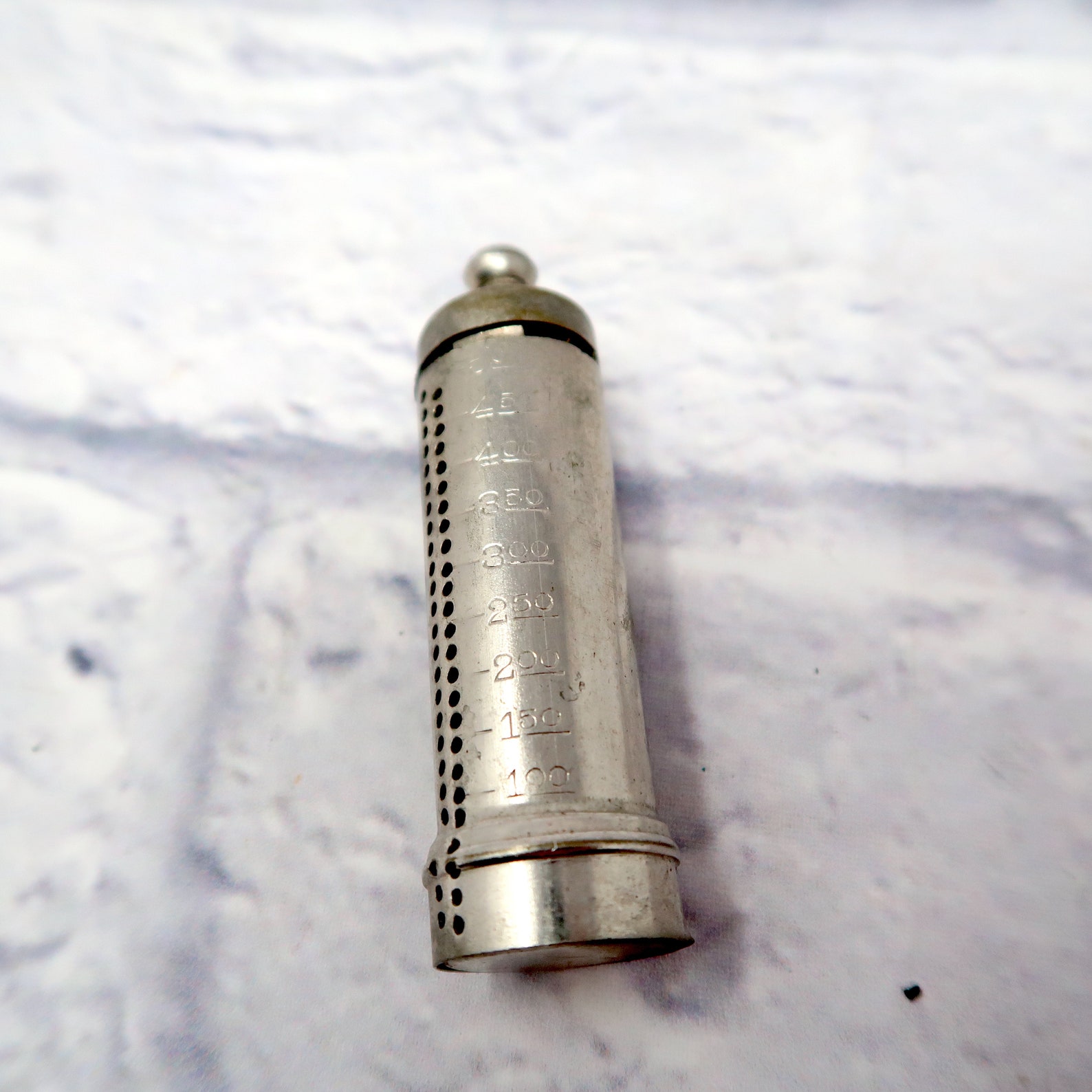
The engraved numbers you can see (such as 100, 150, 200 … up to 500) usually represent cents saved, meaning the bank can track totals from $1.00 to $5.00 in dimes. That may sound small now, but historically it was a meaningful amount—exactly the point of the design: small steps, visible progress.
How it works (simple explanation)
Even without instructions, the design tells the story:
- Insert a dime through the side slot/opening.
- Inside, the dimes stack neatly in a column.
- The top plunger/knob helps compress or settle the stack so more coins fit and the total stays aligned with the scale.
- The stamped measuring scale shows your saved total as the stack rises.
- When it’s full (or when you’re ready), you open it to remove the coins.
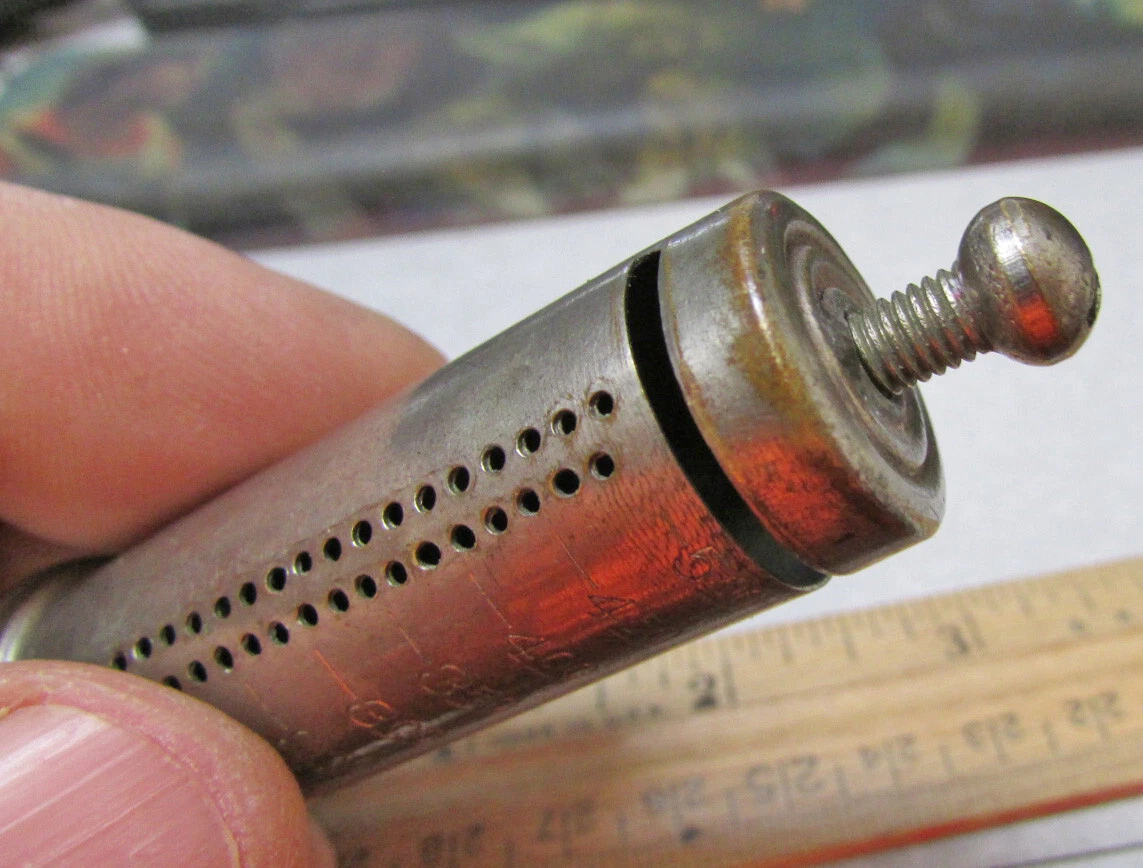
Those tiny perforated holes along the body weren’t just for style—they helped with grip, reduced weight, and in some versions made it easier to see the internal stack position.
Why Americans loved it
This bank wasn’t trying to be fancy. It was meant to be practical, motivating, and almost “game-like”:
- It turned saving into a daily routine.
- It gave instant feedback: you could literally see your progress on the scale.
- It carried a message that matched the time: discipline, budgeting, and self-reliance.
That motto—“BE THRIFTY, SAVE A DIME DAILY”—captured a mindset many families wanted to pass down to kids: save consistently, even if it’s just a little.
Why it’s collectible today
Today, the “Little Gem” dime bank is valued because it’s a real artifact of everyday life—something ordinary people actually used. Collectors like it for its:
- compact, mechanical design
- nostalgic thrift slogan
- early American savings culture vibe
- durable all-metal construction
It’s a reminder that long before apps and digital wallets, people built habits with simple tools—and a daily dime.
The big takeaway
The “Little Gem” bank is more than a coin tube. It’s a miniature time capsule of American thrift culture—built to make saving simple, visible, and rewarding.
If you ever find one in a drawer, antique shop, or family collection, you’re holding a small piece of history built around one bold idea: consistent saving wins.