The Priority Seat Dilemma: One Choice, Four Strong Reasons
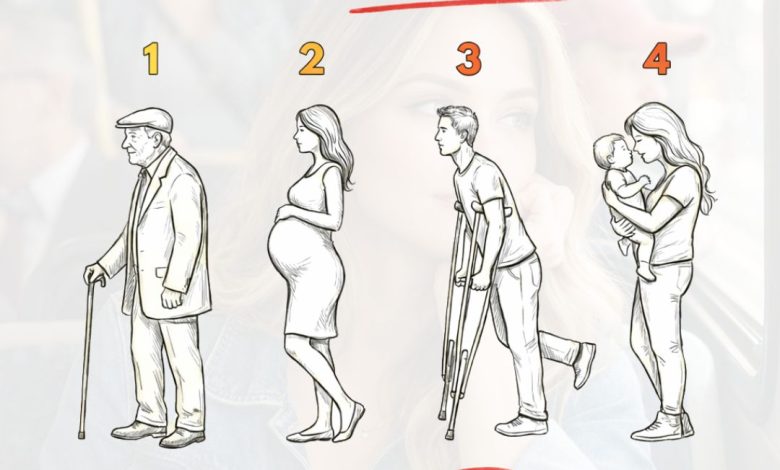
A simple image asks a surprisingly hard question: “Who would you give your seat to—and why?”
Four people are standing in line, each with a reason you might feel they should sit:
- An elderly man using a cane
- A pregnant woman
- A young man on crutches (injured/disabled mobility)
- A mother holding a baby
This isn’t just a “kindness test.” In real life—on buses, trains, or in waiting areas—priority seating is about safety and risk, not just sympathy.
What “Priority” Usually Means in Real Life
Most public-transport rules and common etiquette prioritize people who have the highest physical risk if forced to stand, especially those who may fall easily or cannot stabilize themselves during sudden stops.
That generally includes:
- People with mobility impairments or injuries (crutches, casts, disabilities)
- Pregnant passengers
- Older adults
- Adults carrying small children/infants

The Correct Answer (Best Choice)
Give your seat to: #3 (the person on crutches).
Why #3 is the top priority:
- Standing on crutches is unstable—one sudden brake or bump can cause a dangerous fall.
- The person cannot easily shift weight or grab support the way others often can.
- This is the clearest, most immediate injury-risk situation.
If You Can Choose More Than One: A Practical Priority Order
If there are multiple seats available, or if you can ask others to help, a fair “risk-first” order is:
- #3 (crutches / injured mobility)
- #2 (pregnant woman)
- #1 (elderly man with cane)
- #4 (mother holding a baby)
Important note: #4 still matters—holding a baby can be exhausting and risky too. But in many real-life guidelines, the highest fall-risk mobility cases usually come first.
The Smartest Real-World Move
If you’re unsure, do this:
- Offer your seat to #3 first.
- If they refuse, offer it to #2, then #1, then #4.
- Or ask: “Who needs it most right now?” Sometimes one person is okay for a few stops, while another is truly struggling.
Why This Image Goes Viral
Because it forces people to reveal how they define “deserving”:
- Safety-first thinkers choose the injured/disabled person.
- Care-first thinkers choose the pregnant woman or mother with baby.
- Respect-first thinkers choose the elderly man.
But when the prompt demands one “correct” answer, the most defensible choice is the one based on immediate physical danger.