The McSpoon Story: How a Plastic Spoon Turned Into Street Slang
A Surprising Secondhand Market
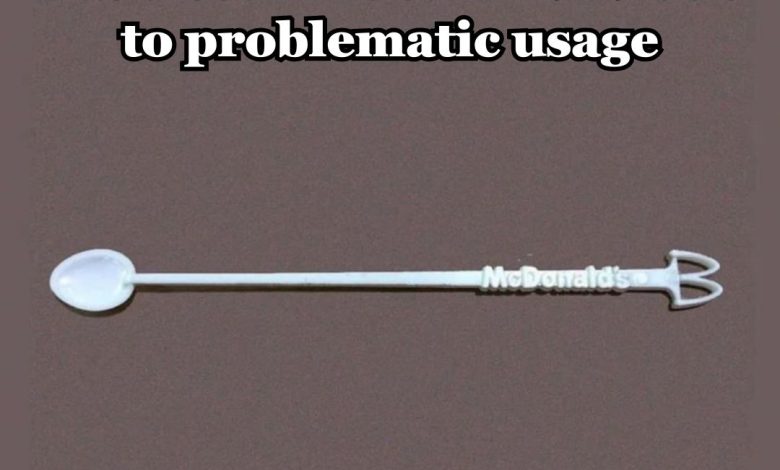
If you search eBay for “McSpoon,” you will find a thriving resale market for the small plastic coffee spoons McDonald’s introduced in the 1970s and 1980s. Some listings reach $1,500—not because they were rare at launch, but because they were discontinued and became infamous.
What Was the McSpoon?
The McSpoon was a small plastic coffee spoon/stirrer designed for mixing sugar and cream into coffee. Its compact size and shallow bowl made it convenient for customers—and, as it turned out, attractive for a very different reason.
The Controversy That Changed Everything
By the late 1970s, U.S. media began reporting that the spoon was being used as a quick measuring tool for powdered drugs—especially cocaine and PCP (phencyclidine).
Reports claimed:
- The spoon could hold enough powder for a strong single dose.
- It was easy to pocket and reuse later.
- In street talk, one spoonful became associated with a specific amount—commonly described as about 100 milligrams of cocaine.
How “McSpoon” Became Drug Slang
The alternative use became so widely discussed that in some places a dose of cocaine was reportedly referred to as “a McSpoon.” The nickname stuck, turning a simple coffee accessory into a recognizable label in 1970s drug culture.
A Party Story That Reached McDonald’s
One widely circulated account described an October 1979 article about a private party in a New York City loft, where guests were allegedly greeted with:
- A large bowl of cocaine
- Multiple McDonald’s spoons placed around it
- Guests taking a spoon, scooping, and continuing the party
Whether exaggerated or not, stories like this fueled public pressure and intensified the spoon’s notoriety.
So Big It Reached the U.S. Congress
The McSpoon controversy grew large enough that it was reportedly discussed in a U.S. congressional context, where concerns were raised about whether items like this could be classified as drug paraphernalia.
Why the Timing Mattered: America’s “War on Drugs” Era
This debate unfolded during a period of heightened national focus on drug enforcement:
- In the early 1970s, President Richard Nixon escalated federal efforts against drug use and trafficking, a period commonly linked to the start of the modern “war on drugs.”
- By the late 1970s, anti-drug groups pushed hard to restrict drug paraphernalia (items that could be used to consume or measure drugs).
- In 1979, the DEA’s Model Drug Paraphernalia Act helped shape broad definitions of paraphernalia—sometimes vague enough that everyday objects could qualify depending on context.
McDonald’s Response: A Fast Redesign
Facing public pressure, McDonald’s moved to distance itself from the controversy by redesigning the coffee utensil. The spoon was replaced with a flat, paddle-style stirrer, reducing any resemblance to a measuring scoop.
A company spokesperson at the time explained the change in simple terms: the utensil had been reported as used illegally, so it was redesigned.
The Unexpected Aftermath: Excess Stock Abroad
The story did not end immediately. After the redesign, McDonald’s reportedly had hundreds of thousands of the original spoons left. Many were sent to restaurants in other countries—and reports later claimed that criminal groups reused them as measuring tools again, this time linked to other drugs such as heroin.
Why McSpoons Are Still Sold Today
Over time, supplies dwindled, but the spoon’s reputation grew. Today:
- Authentic McSpoons can command high prices due to nostalgia, infamy, and scarcity.
- There are also replicas or look-alikes sold for less.
- The term “McSpoon” remains a recognized cultural reference tied to that era’s drug slang, often linked to 100 mg in the lore surrounding the object.
Key Takeaways
- The McSpoon began as a harmless coffee spoon in the 1970s–1980s.
- It became controversial when reports claimed it was used to measure powdered drugs.
- Public scrutiny escalated to national-level debate, prompting McDonald’s to redesign the utensil into a flat stirrer.
- Leftover inventory was reportedly shipped abroad, extending the spoon’s underground reputation.
- Today, original McSpoons have become unusual collectibles, sometimes selling for hundreds to over a thousand dollars.