The Hidden Notch in Old Church Pews—and What It Was Really For
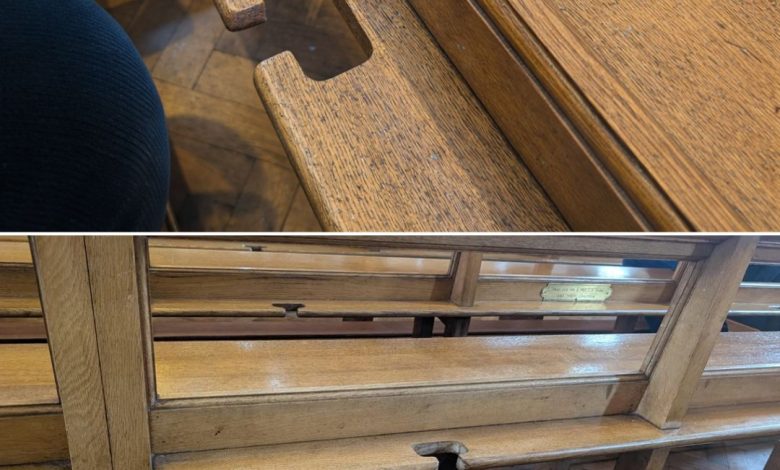
A small U-shaped or rectangular cut-out in the back of an old wooden pew wasn’t an accident. In many historic churches and chapels, those slots were built on purpose to hold vintage hand fans—a practical cooling tool from the era before air conditioning.
The Good Old Days Before A/C
Long before thermostats, ceiling fans, and central air, summer services could be brutally hot. Churches packed with worshippers—often dressed formally—turned into stuffy, humid spaces, especially during midday services and summer revivals.
Open windows helped a little. So did fanning yourself with a program. But one solution became the favorite because it was cheap, effective, and easy to share: the classic church hand fan.

What Vintage Church Fans Looked Like
These weren’t fancy fans. Most were a flat cardboard paddle attached to a small wooden handle.
Common designs included:
- Religious images or scripture themes
- Scenic illustrations
- Local advertisements, often from community businesses
Because they were lightweight and inexpensive, many churches made them a standard part of Sunday life—available to everyone.
Why the Notch in the Pew?
Those pew cut-outs were essentially built-in fan holders.
Before services started, the fans were placed neatly into the slots so that:
- Every person had one within arm’s reach
- Fans stayed organized instead of scattered
- The church didn’t need people to bring their own
Once the sermon began—especially on hot days—fans would rise throughout the sanctuary, creating a soft wave of air movement as people tried to stay comfortable.
More Than Cooling: A Small Ritual of Church Life
Over time, the hand fan became more than a tool. It was part of the atmosphere and routine.
People used them in different ways:
- Children played with them or waved them constantly
- Older adults held them tightly during long sermons
- After services, fans were often returned to the slot to be used again
That tiny notch in the wood quietly supported a whole pattern of behavior—a shared, familiar habit that many people still remember.
A Cultural Artifact That Became Collectible
Today, vintage church fans are often viewed as nostalgic keepsakes. They represent a period when communities relied on simple, low-cost fixes, and when everyday objects doubled as local history through printed artwork and advertisements.
A Forgotten Utility, Rediscovered
As air conditioning became common, these fans gradually disappeared from weekly use. But the pew notches remained—leaving modern visitors puzzled.
Now, when someone spots that odd slot carved into an old pew, it often raises one question: Was this damage… or something else?
The answer is surprisingly simple: it was a place for a fan—an everyday solution from a time when comfort was handmade, shared, and quietly organized.
The Charm Lives On
You may still find:
- An old pew with a visible notch in a historic church
- A preserved hand fan displayed like a small relic
- Vintage fans sold as collectibles
And once you know what that notch was for, it changes how you see it: not as wear-and-tear, but as a clever reminder of how people stayed cool—together—long before modern cooling existed.