Stumbled across these black, finger-like things poking out of the mulch in my backyard. They are hard and creepy.
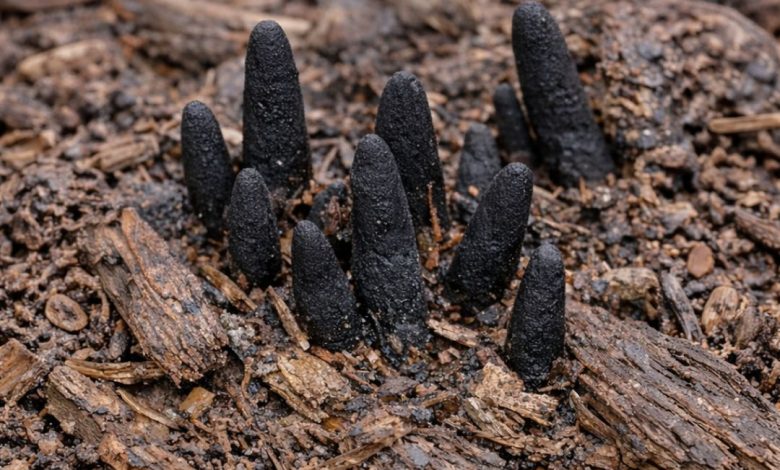
Spotting something strange in your backyard can be enough to make anyone stop in their tracks. When dark, finger-shaped growths start pushing up through mulch or garden beds, it is easy to assume the worst. Their eerie appearance often sparks concern, especially for homeowners who have never seen anything like them before.
In many cases, these unsettling growths are actually a fungus called Dead Man’s Fingers, known scientifically as Xylaria polymorpha. Despite the dramatic name and spooky look, this fungus is generally not dangerous to people, pets, or healthy plants. What seems frightening at first is often just one of nature’s oddest cleanup crews quietly doing its job.
Why It Looks So Disturbing
Dead Man’s Fingers gets its common name from the way it appears above the soil. The fruiting bodies are typically black or very dark brown, narrow, and upright, often resembling bony fingers reaching out of the ground. Mature growths are usually around 3 to 4 inches tall, though they can vary in size.
Part of what makes them so unnerving is the way they change over time. When young, they may start off pale gray or whitish, with a softer surface. As they age, they become hard, dry, and woody, turning darker until they take on that signature blackened appearance.
What Dead Man’s Fingers Actually Are
This fungus is a saprobe, which means it feeds on dead and decaying organic matter rather than attacking living plants. It often grows on buried wood, rotting roots, old stumps, or wood-rich mulch. Even if you only see the black “fingers” above the surface, there is often decomposing wood hidden underneath.
Dead Man’s Fingers plays an important role in nature by helping break down tough plant materials like cellulose and lignin. In other words, it is part of the natural recycling system that returns nutrients to the soil.
How to Recognize It
A few features can help you identify this fungus more confidently. Look for upright, club-like or finger-like structures, often appearing in small groups. The surface is usually fairly smooth, and mature specimens are dark and firm. If cut open, the inside is often white or pale.
It is most commonly found in areas where wood chips, mulch, or buried wood debris are present. You may also notice it at the base of trees, near old roots, or in shady garden beds with a lot of moisture.
Why It Shows Up in Mulch
The main reason this fungus appears in yards is simple: it loves decaying wood. Garden mulch, especially mulch made from wood chips, creates an ideal environment. Add damp conditions and shade, and the fungus has everything it needs to grow.
That is why homeowners often notice it after wet weather or during seasons when the air is cooler and moisture lingers longer, especially in spring and fall.
Is It Dangerous?
For most households, the reassuring news is that Dead Man’s Fingers is not considered harmful by touch or by simply being present in the yard. It does not infect healthy garden plants, and it is not known for damaging lawns or flower beds.
That said, it is still not something to eat. Like many wild fungi, it should be left alone unless identified by an expert for a specific purpose. Its tough texture and unpleasant appearance already make it unappealing, but it is best treated as an ornamental curiosity rather than anything useful in the kitchen.
What People Often Confuse It With
Because of its odd shape, Dead Man’s Fingers is frequently mistaken for other strange fungi or even bits of dead plant matter. Some people confuse it with stinkhorn fungi, though stinkhorns usually differ in texture, color, and overall structure. Others assume they are old roots or blackened plant stems pushing through the soil.
The difference is that Dead Man’s Fingers tends to have a more distinct fungal form, often rising in clusters and emerging directly from decomposing wood.
What You Should Do If You Find It
If you discover Dead Man’s Fingers on your property, there is usually no urgent action required. In fact, leaving it alone is perfectly reasonable if it does not bother you. It is helping decompose organic material and is part of a healthy natural process.
If you do not like the look of it, you can remove the visible growths by hand while wearing gloves. It is also helpful to remove the rotting wood or woody mulch source underneath, since that is what feeds the fungus. Without that source, regrowth becomes less likely.
How to Remove It Safely
For homeowners who want it gone, removal is fairly straightforward. Wear gardening gloves, gently pull up the visible fungal bodies, and check for any buried wood fragments or decaying roots in the area. Throw the material into yard waste or compost if appropriate for your local disposal system.
Keep in mind that simply removing the black growths above ground may not stop it from coming back if the decaying wood below the surface remains in place.
Can You Keep It From Returning?
Prevention mostly comes down to changing the environment that encourages it. Since this fungus depends on dead wood, reducing old roots, buried stumps, and decomposing wood mulch can help. Improving drainage, airflow, and sunlight exposure may also make the area less favorable for fungal growth.
In some cases, switching to mulch materials that contain less wood can reduce the chances of seeing it again.
When to Ask an Expert
Not every strange fungus in a yard is easy to identify. If you are uncertain what you found, or if it appears near valuable trees and shrubs and you are worried about underlying decay, contacting a local extension office, arborist, or fungal expert is a smart move.
Professional guidance is especially helpful when unusual growths keep returning, spread widely, or appear around areas where tree roots may already be weakened.
A Strange Sight, But Usually Nothing to Fear
Dead Man’s Fingers may be one of the creepiest things you can discover in a backyard, but in most cases, it is more fascinating than threatening. Its strange appearance can be startling, yet it is usually just a sign that nature is at work breaking down old wood beneath the surface.
For curious homeowners, it can even become a reminder that backyards are full of hidden life. Sometimes the weirdest discoveries turn out to be the most interesting ones.