ST. CONTRAST couples!
When Elisabeth, a 34-year-old lawyer, joined OkCupid in May 2014, she expected very little. Online dating can be exhausting for anyone, but for fat women it can be especially harsh—full of snap judgments, casual cruelty, and the constant pressure to “present” yourself in a way that feels safer than truthful.
She didn’t sign up because she was optimistic. She signed up because a friend, newly back in the dating world after divorce, asked a few close women in her circle to do it together—part solidarity, part moral support. Elisabeth agreed, but with a twist: instead of carefully polishing her profile the way she always had, she decided to do the opposite.
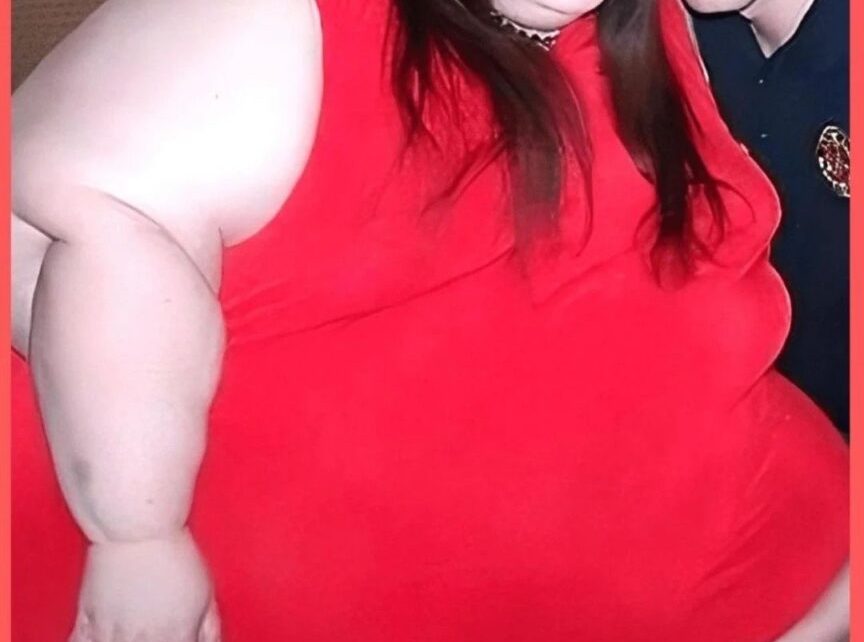
She would create “the single most obnoxious version” of herself.
Not obnoxious in a mean way—obnoxious in a fully herself way. Photos with her cat. No coyness. No sanding down her edges. No pretending to be “low maintenance” or “chill” if that wasn’t true. Most importantly, she refused to play the game she knew too well: the strategic camera angles, lighting, and styling choices that can make someone look significantly smaller in photos than they will in real life.
Elisabeth was clear about her body. She wears XL to 2XL in dresses and size 16 to 20 in pants. She didn’t treat that like a confession or a warning. She treated it like a fact—because it is.
And that choice came from a hard-earned lesson: curated photos can feel protective online, but they can create a painful moment offline.
The “Photo Trap” Many Fat Women Know Too Well
Elisabeth described a common mental trap in app dating—especially for fat women: the idea that if you can just photograph yourself “the right way,” you can avoid rejection. You can reduce the chance of someone being disappointed. You can try to control the first impression.
But there’s a cost.
Because the first date is not a curated rectangle on a screen. It’s real-life lighting, real-life movement, real-life proportions—and the other person’s expectations. When photos dramatically minimize your size, you may spend the entire date bracing for the moment they realize you’re bigger than they imagined.
That anxiety isn’t vanity. It’s survival in a culture that routinely punishes fatness with disrespect.
So Elisabeth opted out.
Her thinking was simple: if someone can’t handle the truth of her body, she’d rather know before she spends time, energy, and hope. Her profile became a filter—not just for attraction, but for character.
Why Radical Honesty Can Be a Power Move
Elisabeth’s approach highlights something many people learn the hard way on dating apps:
- You can’t prevent all rejection.
- You can prevent wasting time on people who were never safe for you in the first place.
- A profile isn’t just an advertisement—it’s a boundary.
By being unapologetic and specific, she reduced the chances of walking into a first date that started with a silent audit of her body.
Just as importantly, she stopped performing for strangers.
What Her Strategy Teaches About Dating While Fat
Elisabeth’s story isn’t about “fixing” anything about yourself. It’s about refusing to shrink your life to make other people comfortable—and designing your dating experience to protect your dignity.
Here are the core principles her approach models:
- Use current, accurate photos. Not to “prove” anything—just to reduce anxiety and misalignment.
- Let your profile repel the wrong people. A good profile doesn’t attract everyone. It attracts the right ones.
- Be upfront about non-negotiables. The goal is compatibility, not mass approval.
- Don’t pre-apologize for your body. Confidence doesn’t mean you never feel insecure; it means you don’t hand strangers permission to disrespect you.
- Remember: attraction is not the only metric. Courtesy, empathy, and maturity matter just as much.
The Bigger Point: You Don’t Owe Anyone a “Smaller” Version of You
Online dating often pressures women—especially fat women—to be palatable: softer, quieter, less visible, less “complicated.” Elisabeth did something quietly radical. She showed up as herself in full resolution, cat photos and all, and treated her body as a normal part of her identity rather than a problem to solve.
That doesn’t guarantee easy dating. Nothing does.
But it does something else: it makes dating more honest, less humiliating, and far more aligned with self-respect.
And for many people, that’s the difference between endlessly “trying” dating apps and finally using them in a way that feels livable.