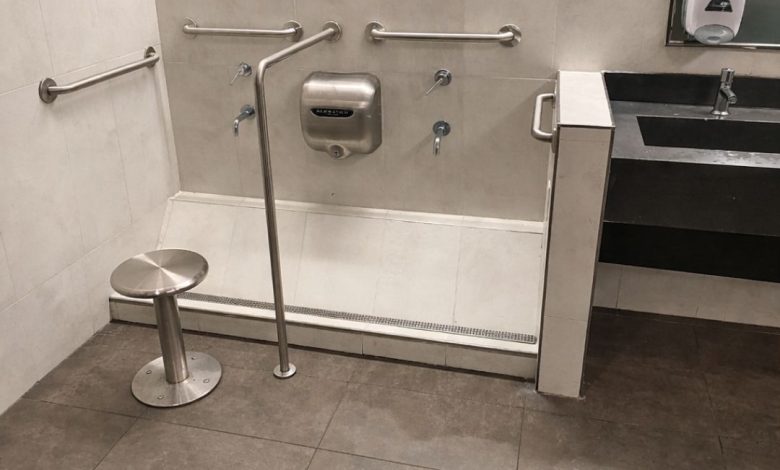
Saw this in a restroom which has faucets and drain down low and a dryer. Any idea?
Why This Restroom Setup Exists
Public restrooms like the one shown are sometimes designed to support foot-washing (wudu)—a hygiene step many Muslims perform before prayer. Instead of forcing people to awkwardly lift a leg into a standard sink, the setup provides a safer, cleaner, and more respectful alternative.
What’s in the Photo (Key Features)
- Low-level water fixtures (multiple taps at accessible heights) to make washing easier without climbing or balancing.
- Grab bars and railings to support stability and reduce slipping risk.
- A small seat/stool so a person can wash feet while seated rather than balancing on one leg.
- A low-mounted hand dryer positioned so it can be used to dry feet before putting socks back on.
- A floor drain area that helps manage splashes and reduce standing water.
The Problem It Solves in Typical Restrooms
Many people attempting foot-washing in a standard restroom face two bad options:
- Putting a foot in the sink (awkward, unsafe, and often seen as socially inappropriate).
- Pouring water over the foot below the sink (often leads to wet floors, increasing slip hazards and complaints).
This design reduces both issues by offering a dedicated, safer space for washing and drying.
Why It Matters for Muslim Users
For many Muslims, wudu includes washing the feet as part of preparing for prayer. In busy public places—like airports—this becomes challenging because:
- Restroom floors can be unsanitary, and stepping in puddles or tracked-in residue makes “clean feet” difficult to maintain.
- People may try to keep one shoe on while washing the other foot, then switch—an awkward process that draws attention.
- Without proper facilities, people may end up walking around with wet feet if paper towels are unavailable and dryers are inconvenient to use while balancing.
With a dedicated setup, the process becomes faster, safer, and less uncomfortable for everyone nearby.
Why It’s Helpful for Everyone (Not Only Muslims)
Even if you don’t perform wudu, this setup can benefit:
- People who need to wash feet for comfort, medical reasons, or mobility support
- Travelers dealing with blisters, swelling, sand, or irritation
- Anyone who appreciates a design that reduces water on the floor and improves overall restroom cleanliness
Social Impact: Less Awkwardness, Less Mess
A dedicated foot-washing area:
- Minimizes the chance of someone being judged for using a sink in an unexpected way
- Helps prevent wet floors, which are inconvenient and unsafe
- Signals that the facility is designed with real user needs in mind—especially in high-traffic public spaces
A Practical Sign of Inclusive Design
When public restrooms include features like foot-washing stations, handheld sprayers/bidets, or water-access solutions, it often reflects the needs of diverse users. The goal is simple: cleanliness, dignity, safety, and fewer problems for everyone sharing the space.