Pulled my beef roast out of the slow cooker and saw these weird white stringy things poking out of the meat. They look like little worms or parasites.
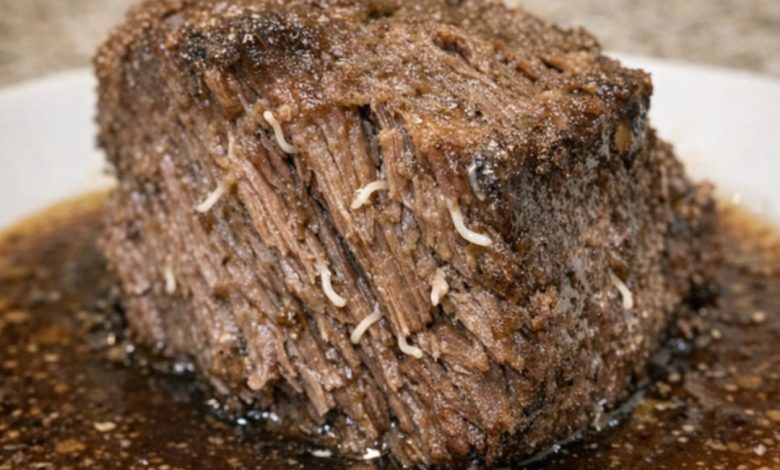
Few things are more disappointing than lifting the lid off a slow cooker after hours of waiting and spotting something in your beef roast that looks completely wrong. If you notice white stringy pieces sticking out of the meat, it can be unsettling at first. A lot of people immediately worry that they are looking at worms, parasites, or spoiled meat.
In most cases, though, that is not what is happening.
Those strange white strands are usually just connective tissue, collagen, or muscle fibers that changed appearance during the long cooking process. Certain cuts of beef naturally contain more of these structures, and slow cooking can make them stand out even more. Before you toss the whole roast, it helps to understand what you are actually seeing and what real warning signs look like.
The White Strings Are Usually Not Worms
Seeing something unexpected in cooked meat can trigger panic fast, especially when it has a stringy or thread-like look. But in a typical slow-cooked beef roast, those white bits are most often a normal part of the meat itself.
Beef contains connective tissue that helps hold muscle together. When you cook a roast low and slow for several hours, that tissue begins to soften, separate, and sometimes turn pale or stringy in appearance. What looks alarming is often just a visible result of the meat breaking down the way it is supposed to.
True parasites in commercially sold beef are uncommon, and properly cooked beef is even less likely to present that kind of issue.
Why Beef Naturally Has Stringy Tissue Inside It
Every roast is made up of more than just solid muscle. Inside the meat are muscle fibers, collagen, fat, and connective tissue. Tougher cuts such as chuck roast, brisket, and round roast contain more collagen because they come from hardworking parts of the animal.
That is exactly why those cuts do so well in a slow cooker.
Over time, the collagen softens and transforms, helping the roast become tender and rich. Sometimes, though, parts of that tissue remain visible as white strands or string-like pieces, especially when the meat is pulled apart or sliced.
What Slow Cooking Does to a Roast
Slow cooking changes the structure of meat in a big way. The long exposure to low heat gradually breaks down tough tissues that would stay chewy with faster cooking methods. That is how a roast that starts out firm can eventually become fork-tender.
As this happens, collagen melts down and muscle fibers tighten, shift, and separate. The result can be a roast that tastes great but has a few white strings that suddenly become more obvious than they were when the meat was raw.
In other words, the strange appearance is often part of the same process that makes the roast tender in the first place.
Why the Strings Seem to “Pop Out” After Cooking
One reason these white strands can look so dramatic is that the meat shrinks as it cooks. Muscle fibers lose moisture and contract under heat. When that happens, some connective tissue may become exposed or pushed outward, making it more noticeable on the surface or between sections of the roast.
That visual effect can make it seem like something is emerging from the meat, when in reality it was always there. The cooking process simply made it easier to see.
How to Tell the Difference Between Normal Tissue and Something Concerning
Normal connective tissue usually looks soft, pale, fibrous, or slightly gelatinous. It may pull apart easily with a fork and often appears attached to the meat in strips or clusters.
Something more concerning would likely look unusual in a more defined way. If you ever see structures that seem separate from the meat, unusually uniform, or clearly unlike fat and connective tissue, it is worth taking a closer look. But for most home cooks, the white strings in a slow cooker roast are just part of the cut.
The bigger question is not whether the strings look odd. The bigger question is whether the roast shows real spoilage signs.
The Real Warning Signs to Watch For
If your beef roast smells normal and looks otherwise fine, those white strings alone are usually not a reason to throw it out. What matters more are the classic signs of spoiled meat.
Be cautious if the roast has a sour or rotten smell, a slimy or sticky surface, an unusual green or gray cast, or a texture that seems off in a way that is not typical of cooked beef. Those signs are more meaningful than a few pale strands inside the meat.
If the odor is bad or the texture seems wrong in a suspicious way, it is smarter not to eat it.
Proper Cooking Temperature Matters
A properly cooked roast is far less likely to pose a food safety risk. Beef should reach a safe internal temperature, and slow cooker roasts often cook well beyond that after several hours. That is one reason slow cooking is such a reliable method for tougher cuts.
If you want reassurance, use a meat thermometer. Safe cooking temperature is one of the best ways to reduce concern about bacteria and other food safety issues.
Which Cuts Show This Most Often
Some roasts are more likely than others to develop that stringy look. Cuts like chuck roast, brisket, and round roast tend to have more connective tissue, which means they are more likely to produce visible white strands after cooking.
These cuts are popular for slow cookers because they become flavorful and tender over time. The same traits that make them ideal for braising and slow cooking also make them more likely to show collagen and connective tissue in ways that can look unappetizing.
Why Experts Don’t Usually See This as a Problem
People who work with meat regularly—whether in butcher shops or food science—generally recognize this as a normal effect of cooking. Tougher cuts are full of connective tissue by nature, and long cook times change how that tissue looks and feels.
What many home cooks see as something suspicious is often just a normal structural part of the roast becoming more visible after heat and moisture do their work.
How to Make a Roast Look More Appetizing
If the appearance bothers you, there are a few simple ways to reduce the “ick” factor next time.
You can trim away some excess visible connective tissue before cooking, although you do not want to remove everything because that tissue contributes flavor and tenderness. Searing the roast before slow cooking can improve the final appearance and texture. Choosing a well-marbled cut and cooking it evenly with enough moisture can also help the meat break down more smoothly.
Even then, some white strands may still appear. That does not automatically mean anything is wrong.
So, Should You Eat It or Throw It Out?
If the roast was cooked thoroughly and it does not have a bad smell, slimy texture, or other obvious spoilage signs, it is usually safe to eat. Those white strings are most often just connective tissue or collagen made visible by slow cooking.
But if your instincts are telling you the meat smells off or looks genuinely spoiled, do not take the risk. When food safety is in doubt, it is always better to be cautious.
Bottom line: white stringy bits in a slow cooker beef roast are usually normal, not worms. They may look strange, but in many cases they are simply part of how tough cuts of beef break down during long cooking. The most important things to evaluate are smell, texture, color, and whether the meat was cooked properly.