Online Firestorm After Server Says Non-Tippers “Don’t Deserve” Restaurants
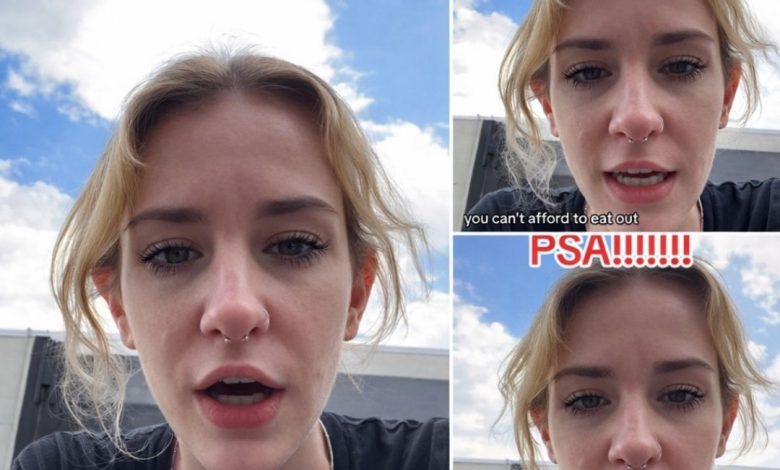
A heated discussion about tipping in U.S. restaurants exploded online after a TikTok user spoke bluntly about customers who spend heavily on meals but leave little or nothing for wait staff. The video quickly drew attention, racking up more than 10,000 views and prompting strong reactions across social media.
Why Tipping Has Become Such a Flashpoint
In recent years, tipping has shifted from a quiet custom to a major cultural argument. Many diners say they feel pressure to treat 15–20% as the default, and some believe anything below 20% is viewed as unacceptable.
Key frustrations people often mention include:
- Tip expectations appearing everywhere (even in situations that didn’t traditionally involve tipping)
- The belief that 20% is treated like a minimum, not a reward for great service
- Confusion over whether tipping is truly optional—or socially mandatory
Who Is Lillie, and What Did She Say?
A restaurant worker named Lillie (TikTok handle @mylasoasis_) posted a video—later removed—arguing that customers should not dine out if they cannot afford to tip.
Her central point was direct:
- “Eating out is a privilege, not a right.”
- If you cannot tip 20%, then you cannot afford to eat out.
@exposednow @The Bereaved Mom (lillie) believes that if you can’t afford to tip 20%, you shouldn’t eat out. #exposednow #tiktok #tipping #serverproblems #server #servertiktok #tippingservers ♬ original sound – Exposed Now
Her Reasoning: Server Pay and “Expected” Gratuities
Lillie said the argument isn’t just about manners—it’s about how servers are paid. She claimed:
- Her hourly wage is $3.63 from the restaurant.
- Most of her income comes from tips, not wages.
- Menu prices are kept lower on purpose because tips are expected to make up the difference.
She summarized her stance as: If you can’t pay the full cost of the experience (including tip), don’t choose that experience.
The Nanny Comparison
To illustrate her point, Lillie compared dining out to hiring childcare:
- If you hire a nanny, you’re expected to pay the full compensation.
- In her view, restaurant service works similarly—customers shouldn’t use a service if they won’t pay what it effectively costs.
Her conclusion was blunt:
- If you can’t tip, get takeaway or eat at fast food instead.
Backlash: “Entitlement” and “Find a Different Job”
Not everyone agreed—especially with how she delivered the message. Common criticisms included:
- People saying the tone sounded entitled, even if tipping is important.
- Comments arguing servers should seek higher-paying work if the current structure is not sustainable.
- Viewers insisting pay is the employer’s responsibility, not the customer’s.
Examples of the pushback themes:
- “I always tip, but the entitlement is crazy.”
- “Look for another job if the salary isn’t enough.”
Support: “Say It Louder” and Shared Server Experiences
Many others strongly supported Lillie, especially those who said they also earn very low hourly wages. Supporters argued:
- The system may be flawed, but it is the system that exists right now.
- Refusing to tip doesn’t punish the owner—it hurts the worker.
- If someone refuses tipping on principle, they should choose businesses that pay fair wages instead.
Supportive reactions included:
- People sharing wages as low as $2.13/hour
- Comments cheering her on: “SAY IT LOUDER.”
A Middle Ground: Tip Culture vs. Tip Performance
Some viewers landed between the two sides: they said they tip consistently, but disagree that 20% is always mandatory, especially if the service is poor.
A common compromise position was:
- Tip based on service quality
- Tip 20% or more in normal situations
- Tip less only when service is clearly subpar
What This Viral Moment Reveals
The reaction to Lillie’s video highlights why tipping remains one of the most divisive everyday topics in America:
- Customers feel pressured and judged by rising expectations
- Workers feel financially dependent on tips to survive
- Many people dislike the system, but disagree on who should fix it—diners, employers, or lawmakers
In the end, the debate wasn’t only about a percentage. It was about fair pay, social expectations, and the real cost of being served.