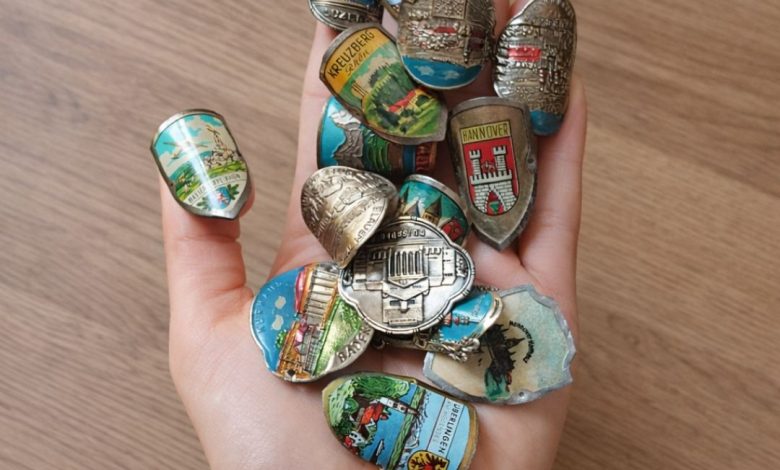
I’ve met an old man in Germany and he sent me these little coat of arms, telling me to visit each of this location before I die. What are these exactly used for?
What They Are
A Stocknagel is a small metal plaque (medallion/badge) that is nailed onto a walking stick or hiking cane. These badges typically show landmarks, towns, scenic attractions, or notable routes, turning a plain cane into a personal record of places visited.
Key Point: Stocknägel are both souvenirs and collectibles, often acquired one-by-one over time.

Where the Tradition Comes From
Stocknägel are originally a Central European / Alpine tradition, strongly associated with hiking culture in regions such as Germany and nearby alpine areas.
They were especially common along well-known hiking destinations and routes, where travelers could purchase a badge as proof they had been there.
Where People Bought Them
Stocknägel were commonly sold at:
- Hiking routes and trail areas (especially popular scenic regions)
- Souvenir shops and local “Andenkenläden”
- Tourist points connected to famous viewpoints, towns, or attractions
One commonly referenced example region is the Sächsische Schweiz (Saxon Switzerland), where hikers often encountered these badges along routes and local shops.
What They Were Used For
Stocknägel served several purposes at once:
- Souvenir of a specific place (a landmark, region, or route)
- Visual “travel log” on a walking stick
- Conversation piece showing where the owner had hiked
- Collectible series that encouraged repeat travel and collecting
How They Were Attached
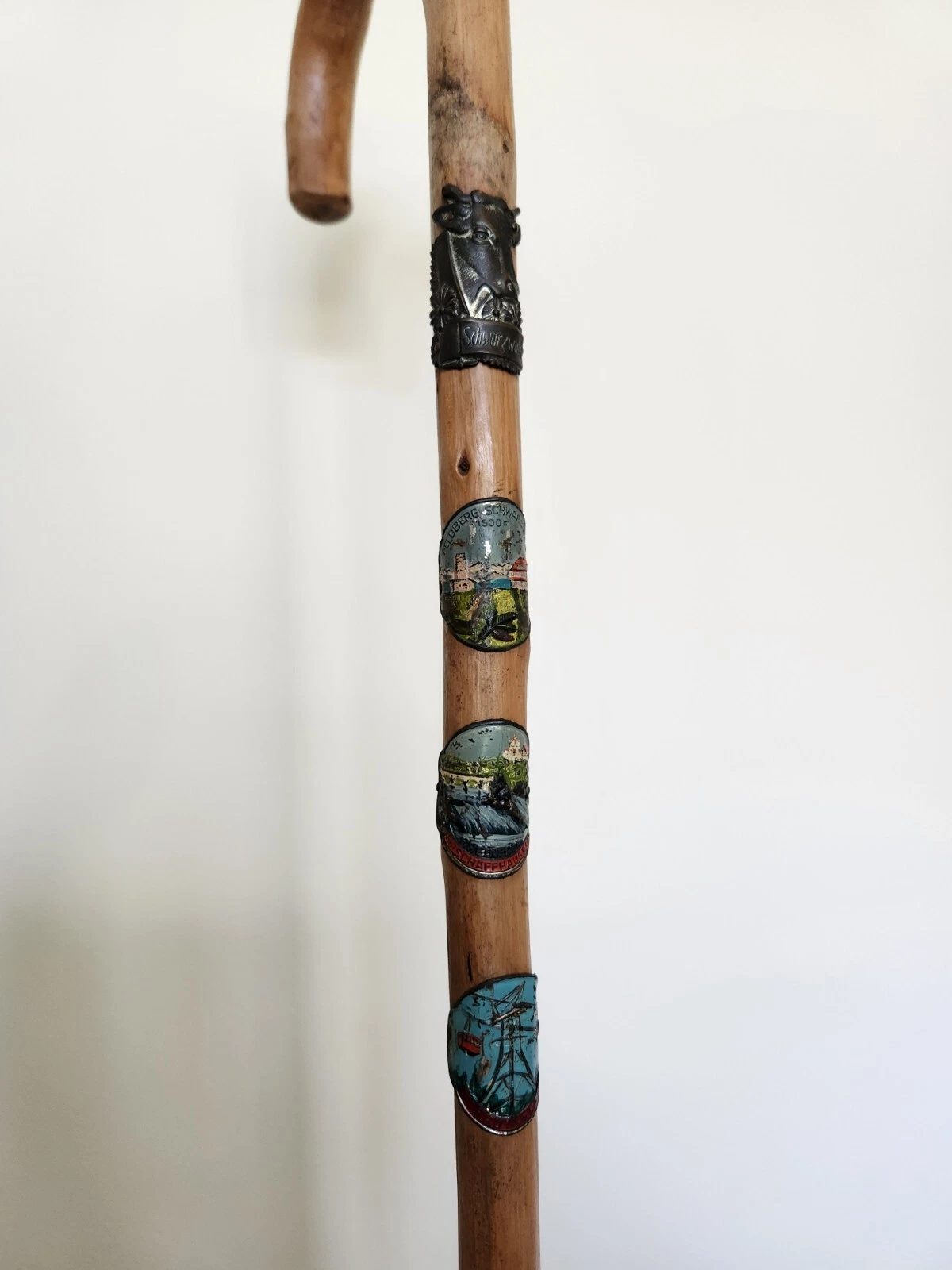
- Each badge was fixed with small nails driven into the wooden walking stick.
- Over time, a stick could accumulate dozens of badges, creating a layered, historical look.
How the Tradition Spread Beyond Europe
Although Stocknägel were historically rare outside Central Europe, their presence expanded in more recent decades.
Since the late 1990s, similar hiking-stick medallions have appeared more often in:
- Large U.S. National Parks
- Major tourist attractions and landmark sites in the United States

An Antique Example: The Badge-Covered Walking Stick
Some antique walking sticks survive as true memorabilia pieces—often described as:
- Handmade wooden canes with a warm brown tone
- Covered with historical hiking badges (Stocknägel)
- Badges representing different territories and adventures across Europe
In notable antique examples, collectors report badges from:
- Germany
- Switzerland
- Belgium
- France
- And other European regions tied to hiking and sightseeing traditions
Dating and Historical Context
Many collectible walking sticks feature badges believed to date from:
- The early 20th century
- Through the period roughly 1900 to 1945
These badges are often valued because they reflect:
- Early tourism and hiking culture
- A time when travel souvenirs were meant to be durable and displayed, not stored away
Why Collectors Want Them Today
Collectors and vintage enthusiasts prize Stocknägel and badge-covered sticks because they offer:
- Authentic, place-specific history
- A unique blend of folk tradition + travel culture
- A ready-made “story object” where every badge marks a journey
In Short
- Stocknägel are metal souvenir badges nailed to walking sticks.
- They began as a Central European/Alpine hiking tradition.
- They function as collectibles and a visible record of travel.
- Many surviving examples date from the early 1900s to around 1945.
- The idea spread more widely, appearing in some U.S. parks since the late 1990s.