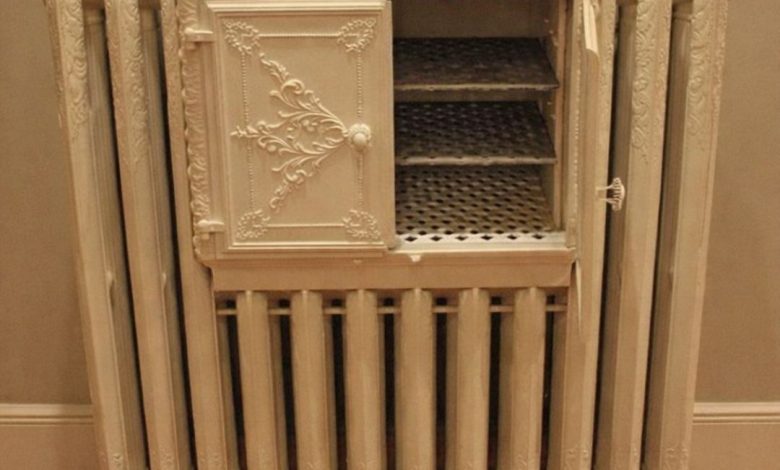
I found this inside an ornate radiator in a Victorian House? Any idea?
What Is It Called?
The object shown in the image is known as a Victorian radiator with a built-in bread warmer (sometimes referred to as a radiator warming oven). It combines a traditional cast-iron heating radiator with a small enclosed cabinet designed for warming food.
When Did It Appear?
This design dates back to the late 19th century, during the Victorian era (1837–1901). At that time, central heating systems were becoming more common in middle- and upper-class homes in Europe and North America. Cast-iron radiators were widely used to heat rooms efficiently, and inventive designers began integrating additional functions into these household fixtures.
What Was Its Purpose?
The primary purpose of the radiator was, of course, heating indoor spaces. However, the built-in compartment above the radiator served an additional and practical function:
- Warming bread before meals
- Keeping dishes warm prior to serving
- Gently heating small food items using residual heat
- Preventing food from cooling too quickly in colder months
The small cabinet typically featured ventilated shelves to allow warm air from the radiator to circulate inside. This created a natural warming chamber without the need for a separate appliance.
How Did It Work?
As the cast-iron radiator heated up, warmth rose into the attached compartment. The enclosed design trapped the heat, allowing it to function like a low-temperature oven. Since Victorian homes often lacked modern kitchen conveniences, this multi-purpose solution improved both comfort and efficiency.
Why Is It Significant?
This radiator design reflects the Victorian emphasis on practicality, craftsmanship, and multifunctional household engineering. Rather than wasting heat, homeowners could make use of it in a secondary way—demonstrating early energy-conscious thinking.
A Blend of Utility and Decorative Style
In addition to its functionality, Victorian radiators were often ornately decorated, as seen in the detailed cast-iron patterns on the door in the image. This shows how even everyday heating equipment was crafted with aesthetic care during the period.
Conclusion
The Victorian radiator with built-in bread warmer, introduced in the late 19th century, was more than just a heating device. It was a practical innovation that allowed families to warm bread and dishes using existing heat. Today, it stands as a fascinating example of historical home design that combined efficiency, elegance, and ingenuity.