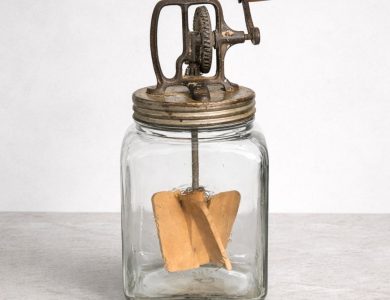
I Found this at a yard sale but I have no idea what it is. Does anyone know what this is?
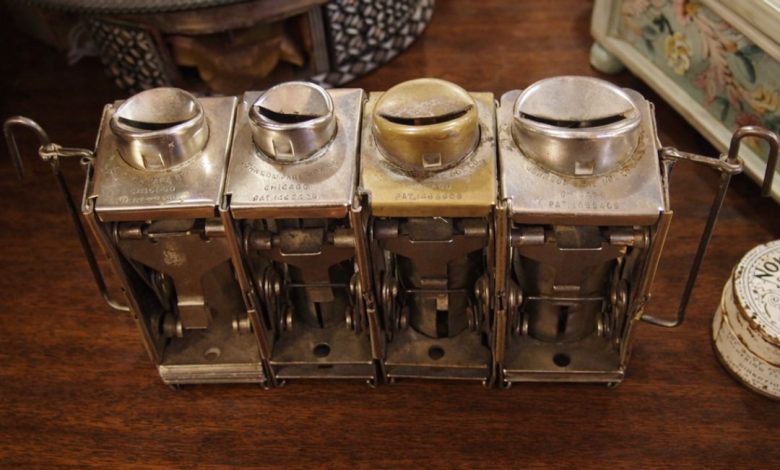
A 4-barrel coin changer is a compact, handheld coin sorting and dispensing box used by trolley, railroad, and bus conductors to collect fares and quickly return correct change. The unit in the photos is commonly identified as a Johnson Universal change maker (also described as a Johnson Fare Box Co. four-barrel coin dispenser).
What It’s Called
- 4-Barrel Coin Changer
- Johnson Universal Change Maker Box
- Johnson Fare Box Co. Four-Barrel Coin Dispenser
- Trolley / Railroad / Bus Fare Coin Dispenser
When It First Appeared
- This style of conductor-worn coin changer is generally associated with the early 1900s public transit era, most commonly 1910s–1930s.
- The stamped marking “U.S. PAT.” on the metal housing indicates it was produced during (or after) the period covered by a U.S. patent filing/issuance, which aligns with early 20th-century manufacturing.
Who Made It
- Produced by Johnson Fare Box Co. (often referenced simply as Johnson in collector listings).
- These devices were made for professional transit use—built to be durable, fast to operate, and easy to carry during a shift.
What It Was Used For
The core purpose was speed and accuracy in handling fares:
- The conductor drops coins into the top slots (each slot feeds a specific tube/barrel).
- Coins stack neatly inside each barrel.
- When change is needed, the conductor dispenses coins from the bottom (typically by a lever/slide mechanism), releasing coins in a controlled way.
- Side hooks allow the device to be attached to a belt, keeping it secure and accessible while moving through a crowded car or bus.
Key Features Visible in the Photos
- Four separate coin barrels/tubes for sorting and stacking different denominations.
- Top coin slots aligned with each barrel for quick “drop-in” loading.
- Bottom dispensing mechanism designed to release coins while keeping stacks orderly.
- Side belt hooks for hands-free carry—critical for conductors collecting fares while standing or walking.
- All-metal construction (typically steel or plated steel) to withstand daily route use.
Why It Mattered on Public Transit
- Faster transactions: Reduced delays at stops and during onboard fare collection.
- Cleaner handling: Coins stayed organized rather than loose in pockets or bags.
- More accurate change: Separate barrels helped prevent mistakes under pressure.
- Operational efficiency: A practical tool for conductors managing high passenger volume.
Modern Comparison
- Conceptually similar tools still exist where conductors or attendants must handle cash and make change quickly, though many systems now use pay-on-entry, prepaid cards, or contactless payment, reducing the need for onboard coin handling.