I came across these tiny items, the purpose of which I am unsure of.
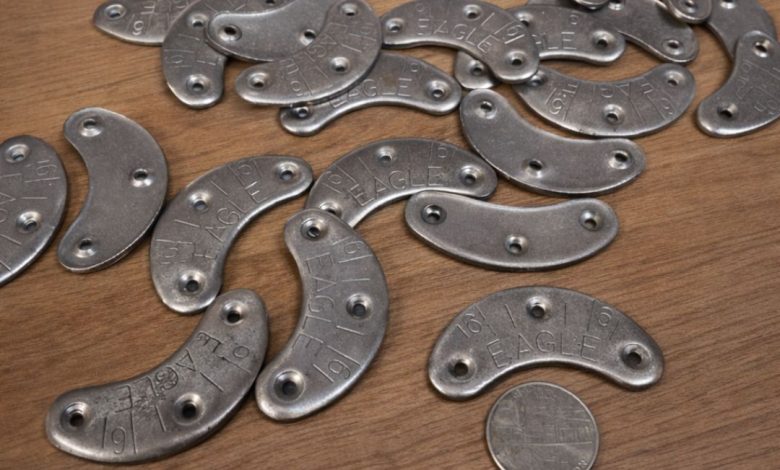
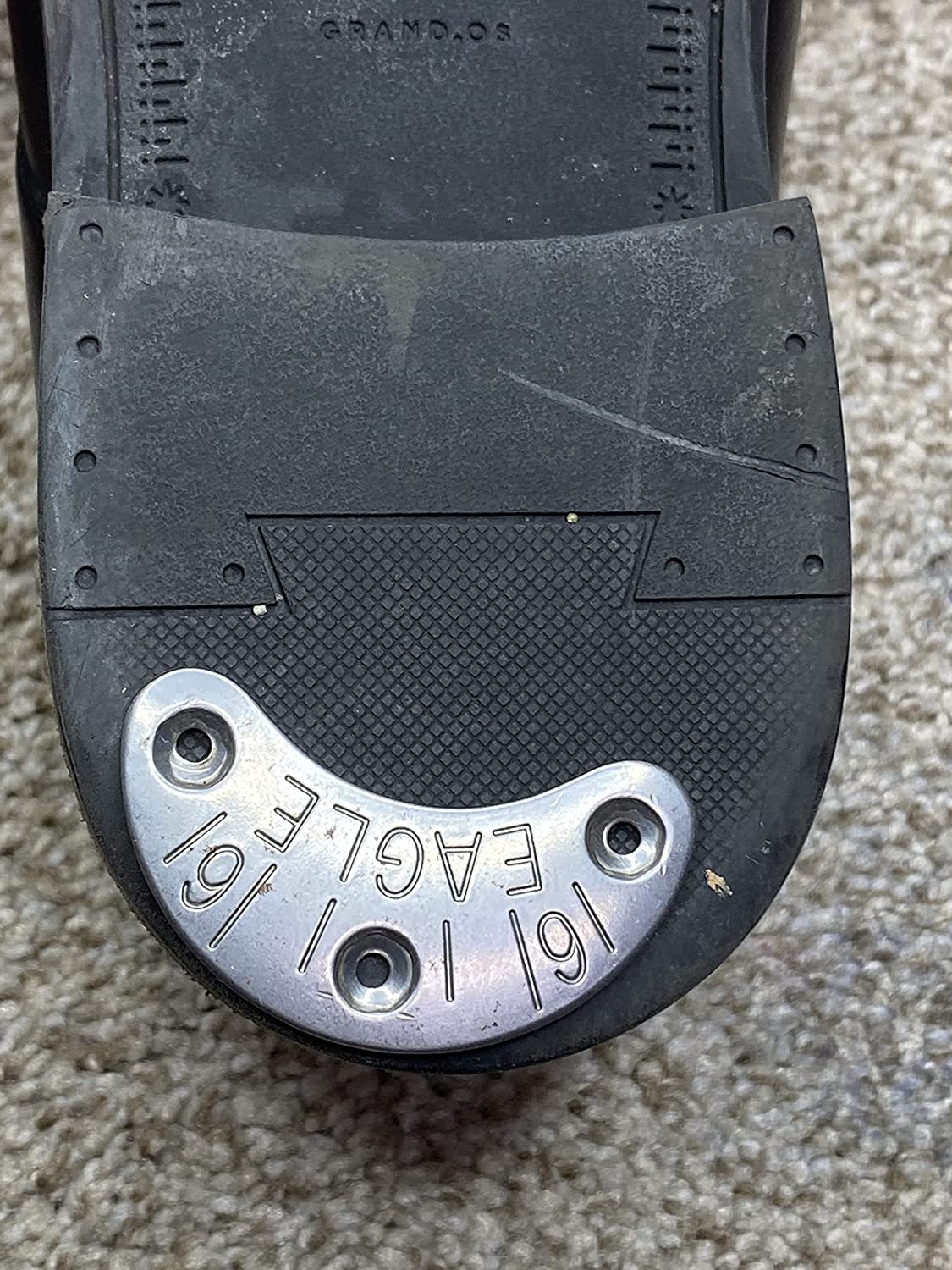
Vintage metal shoe plates—often called heel plates, toe plates, taps, or segs—are small steel or hardened metal protectors that a cobbler fastens to the highest-wear areas of a boot or shoe. In the photos, the curved plates stamped “EAGLE” with a size code (such as “16/16”) are classic examples designed to be nailed or screwed on through the pre-drilled holes.
What They’re Called (Common Names You’ll See)
- Heel plates / heel taps: Protect the back edge of the heel where it scuffs down first
- Toe plates / toe taps: Protect the toe area from scraping and grinding
- Sole protectors / sole plates: Generic term for metal wear plates added to the sole or heel
- Segs: A traditional term in some regions for small metal wear pieces used on footwear
When They First Appeared (Time Period / Era)
Metal reinforcement for footwear dates back centuries in various forms, but the mass-produced, standardized shoe repair plates most collectors encounter became especially common during:
- Late 1800s to early 1900s: Industrial shoemaking and organized cobbler trade made standardized repair hardware widely available.
- 1900s–mid-1900s (especially 1920s–1950s): Heavy daily walking, workwear, and uniform boots drove high demand for durable repairs.
- Still used today (niche): Work boots, dress shoes (toe taps), and heritage cobbler work continue the practice.
Who Created Them (Inventor / Maker)
There is no single inventor credited with “metal shoe taps” as a category—these items evolved as part of the broader cobbling and shoe-repair trade. What you typically can identify instead is the brand/manufacturer stamped on the plate.
- In your images, the stamp “EAGLE” indicates a brand or product line from a shoe-repair supply maker.
- The numeric marking (e.g., “16/16”) is usually a size or pattern code to match different heel/toe shapes.
What They Were Used For (Primary Purpose)
These plates were designed to:
- Reduce wear on heels and toes (the areas that grind down fastest)
- Extend the life of boots/shoes and delay resoling or heel replacement
- Add extra durability for work boots, walking shoes, and uniforms
- Improve grip and stability on certain surfaces (depending on tread and placement)
- Create the familiar “click” sound on hard floors (a byproduct some people liked, some didn’t)
How They Work (Design Features Visible in the Photos)
- Curved crescent shape: Fits the rounded edge of a heel or the toe’s contour
- Pre-drilled holes (often 3): For nails, pegs, or screws used by cobblers
- Stamped branding and size code: Helps identify manufacturer and fit
- Hardened metal surface: Intended to take abrasion instead of the leather/rubber heel
Typical Installation (How Cobblers Used Them)
A cobbler would generally:
- Position the plate on the heel/toe for maximum coverage
- Mark and pre-pierce (if needed) to prevent splitting materials
- Fasten with small nails/screws through the holes
- Seat and finish so edges sit flush and don’t snag
Where You’d Commonly Find Them
- Work boots (construction, factory, outdoor labor)
- Military/police footwear (durability and maintenance routines)
- Dress shoes (toe taps to prevent the toe from wearing through)
- Vintage or heritage footwear restorations (period-correct repairs)
Collector Notes (What Adds Interest/Value)
- Brand stamps like EAGLE and clear size codes
- Sets or lots with multiple identical plates (useful for restorers)
- Minimal rust, intact edges, and clean mounting holes
- Unusual patterns, thicker gauge metal, or uncommon sizing