Home Digging Project Turns Into Shocking Discovery of Underground Shelter
What started as a normal home purchase in Tucson, Arizona quickly turned into something far more unusual for homeowner John Sims. After buying a house from a friend, John heard a lingering rumor that something mysterious was buried beneath the property. At first, he brushed it off—but curiosity kept pulling him back to the question: What if the rumor was true?
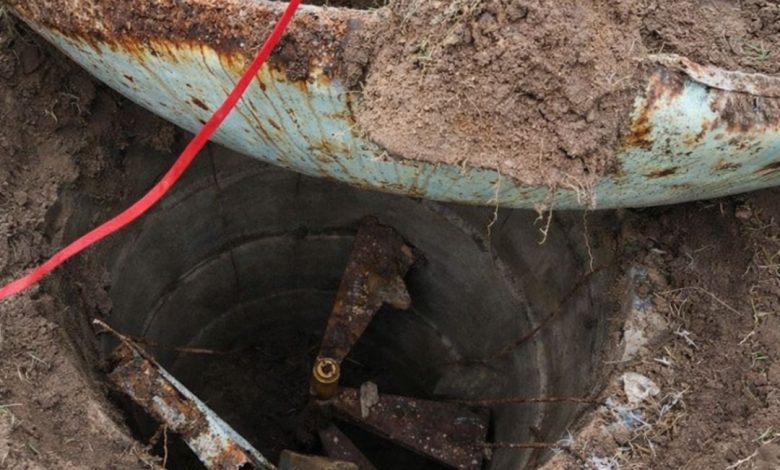
Over time, that curiosity turned into a careful investigation that led to an astonishing find: a buried hatch and a spiral staircase descending into an underground nuclear bomb shelter.

A Rumor That Wouldn’t Go Away
After the sale, John’s friend mentioned there had long been talk about a hidden underground structure on the property. John initially didn’t think much of it, but as the weeks and months passed, he became more determined to confirm whether there was any truth behind the story.
He began with the simplest approach: digging.
The First Attempts: Digging Blind
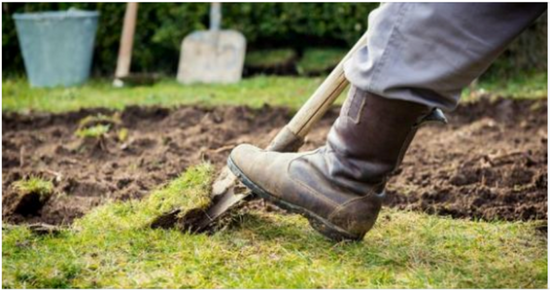
John’s early search was straightforward but unrewarding. He dug four holes in different areas of the yard, hoping to hit something obvious. Nothing turned up.
That’s when he changed strategy. Instead of assuming the secret—if it existed—was under grass and soil, he considered that it might be hidden beneath more permanent landscaping.
Key realization: If there was nothing under the grass, there might be something under the bricks.
The Paper Trail: Records Reveal a Clue From 1961
Rather than continuing to dig at random, John checked municipal records to learn more about the property’s history—especially when it was built and what had been added later.
That search produced a major lead:
- The records showed that a company called Whitaker Pools had built a strange structure on the property in 1961.
- This detail suggested that something was likely buried—and it wasn’t just a local legend.
With that confirmation, John’s search became far more focused.
Metal Detectors Point the Way
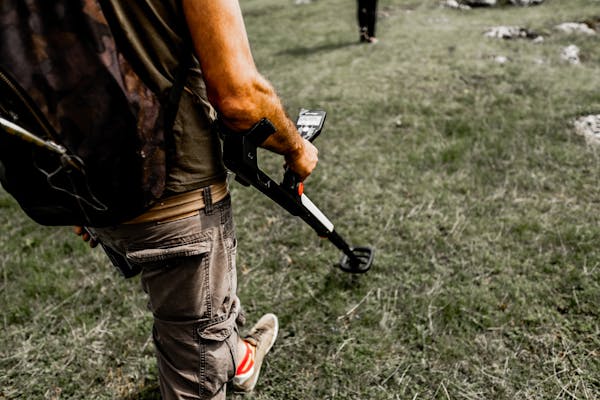
To avoid unnecessary damage and increase his chances of finding the right spot, John hired consultants who used metal detectors to scan the yard. Once the detectors began signaling, he marked the locations with X marks, creating a map of where to dig next.
When he started digging in the marked zones, he struck metal.
But he didn’t rush in.
Important decision: He stopped immediately because the metal could have been electrical wiring, a water pipe, or a septic system.
Instead of forcing his way forward, John worked slowly and carefully over the next several days.
The Moment Everything Changed: A Hidden Hatch Appears
With more precise digging, John uncovered what looked like an entrance hatch. As he leaned closer, a metal lid opened, revealing a dark space below.
Even then, he didn’t climb in.
John recognized a serious danger: confined spaces can contain toxic air, gas fumes, or mold spores. He left the lid open for several days, allowing any trapped gases to vent out, and arranged to have the air tested for mold before anyone entered.
A Spiral Staircase Leading Underground
The next morning, John looked inside the opening and saw a sight that confirmed this was no ordinary backyard feature:
- A spiral staircase heading downward into an underground chamber
At this point, the discovery was no longer a casual DIY project. It required planning, equipment, and backup.
A Fire Department Captain Treats It Like a Rescue Scene
John wasn’t just a curious homeowner—he was also a captain with the Rural/Metro Fire Department. Because of the risks involved, he assembled a crew to help ensure the entry was handled safely.
Before anyone descended, the team focused on structural and air safety, including:
- Repairing and reinforcing the concrete surrounding the stairwell
- Installing Sonotube cardboard around the entrance to prevent damage and stabilize the opening
- Running an electrical line to provide lighting and power for tools
- Installing a black pipe to funnel fresh air into the shaft
Only after the area was secured did John go down first.
The Underground Chamber: A Cold War Bomb Shelter
At the bottom of the staircase, it became clear that the excavation was complete—there was no need to dig further.
The underground space was described as bare, but unmistakable in purpose: it was a nuclear bomb shelter.
John later learned that the structure was linked to a specific historical moment:
- It was built during the Cold War era, when fear of nuclear conflict influenced construction choices across the U.S.
- The company identified in the records, Whitaker Pools, had reportedly expanded beyond pools into building bomb shelters during that period.
Why Tucson? A “Rocket Town” With a Secret History
The discovery also tied into Tucson’s broader past. The story notes that Tucson was once described as a rocket town, linked to a Cold War-era missile presence.
One detail highlighted as part of that context:
- Tucson was associated with 18 ballistic missiles that could travel across continents and potentially devastate a wide area.
- This was considered top secret at the time, and the missiles were later disabled after the Cold War ended.
Whether or not a shelter like John’s was common, the region’s history made the discovery feel especially plausible.
Viral Moment: From Backyard Find to National Curiosity
After sharing the discovery on Reddit, John’s story quickly gained attention, and broader media coverage followed. People were fascinated not only by the shelter itself, but by the idea that a suburban yard could hide a structure built for worst-case Cold War scenarios.
John admitted he had hoped for something different inside:
- He imagined a “time capsule”-style microcosm of civil defense life—supplies, radiation detectors, cots, and equipment.
- Instead, what he found was mostly an empty, stripped-down shelter space.
Even so, the implications of what was hidden there were enough to stun nearly anyone.
What Homeowners Can Learn From This Discovery
John’s experience offers a clear takeaway: if you suspect something unusual is buried on a property, don’t guess—verify. He specifically recommended checking official records to see whether anything was ever built or permitted.
Practical steps he suggested (and demonstrated through his approach):
- Search City of Tucson or Pima County records for property history and unusual additions
- Use professionals and tools like metal detectors to avoid unnecessary digging
- Treat any hatch, tunnel, or void as a hazardous confined space until proven safe
Most importantly, John emphasized safety with a blunt warning:
- “Jumping into holes in the ground is generally not a good idea.”
- Risks include toxic air, structural collapse, and conditions that can incapacitate a person quickly.
A Plan to Restore the Shelter
John expressed a desire to restore the shelter, but the biggest barrier is cost. He has said a key priority is making the shelter safely accessible again—particularly by replacing the staircase, so visitors can enter more easily and explore the space without the same level of risk.
In the end, what began as a rumor turned into a discovery rooted in history—and a reminder that sometimes the ground beneath an ordinary home can hold extraordinary secrets.