Help! I’m old and can’t remember what I am used for? Any ideas?!
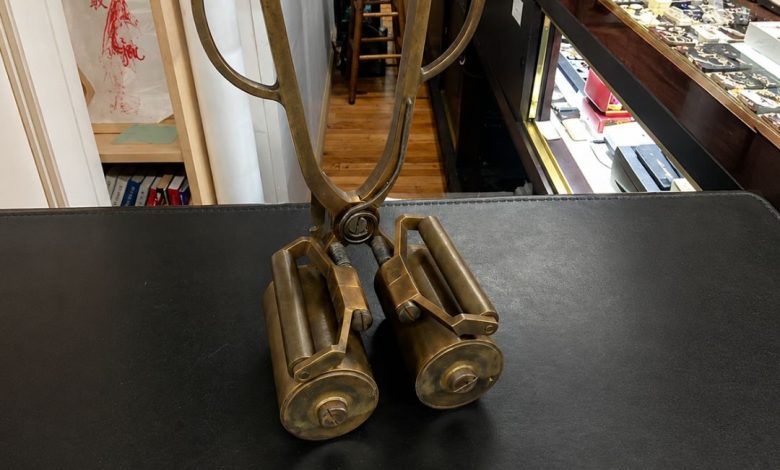
The object in the photo is a vintage fluting iron, also commonly called a pleating iron. It was a household and dressmaking tool used mainly during the 19th century and early 20th century, before modern electric irons and factory-made pleating became common.
A fluting iron was used to create neat pleats, waves, and ruffles in fabric. These decorative folds were especially popular on clothing items such as collars, cuffs, shirt fronts, dresses, trims, and accessories. In Victorian-era fashion, crisp pleats and ruffled details were considered stylish and refined, so tools like this were useful in both homes and tailoring shops.
The device usually worked by pressing fabric between heated metal rollers or shaped surfaces. As the fabric passed through, the heat and pressure helped form repeated folds. This made the fabric look more elegant and structured than it would with hand-folding alone.
Name: Vintage fluting iron / pleating iron
Period of use: Mostly the 1800s to early 1900s
Main purpose: To make pleats, ruffles, and decorative folds in fabric
Common uses: Collars, cuffs, trims, dresses, and formal clothing
Today, vintage fluting irons are mostly collected as antiques. They are valued because they show how much effort people once put into clothing care and presentation. What may look like a strange metal tool today was once an important part of keeping fashionable garments looking crisp and elegant.
Important note: The exact maker, country of origin, and production year cannot be confirmed from the image alone. A maker’s mark, patent number, or stamped logo would be needed to identify it more precisely.