Bought a weird ceramic jar at a spring estate sale. It has a lid with a finger sized hole in the center and hand painted flowers.
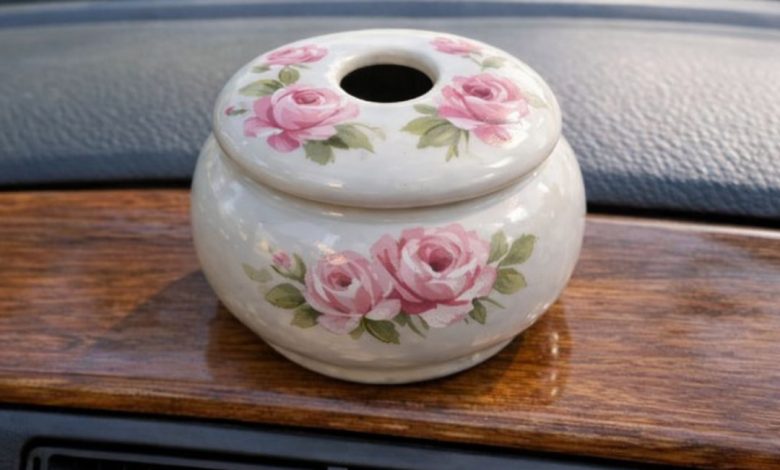
At first glance, it looked like nothing more than a charming little ceramic jar. It was small, glossy, and decorated with delicate hand-painted flowers, the kind of piece that might sit quietly on a shelf without drawing too much attention. But one unusual detail made it impossible to ignore: the lid had a perfectly round hole in the center, about the size of a finger.
That single feature turned an ordinary estate-sale find into a mystery.
The jar was about 5 inches tall and 4 inches wide, empty inside, with no scent, no residue, and no obvious clue about what it once held. Its floral design suggested age and craftsmanship, likely from a period when even everyday household items were made to be both useful and beautiful. The real question, though, was simple: why would a jar be designed with a hole in the lid?
The answer points back to a fascinating piece of domestic history. This object was most likely a Victorian-era hair receiver, a once-common item found on women’s vanities in the late 19th and early 20th centuries.
A hair receiver served a surprisingly practical purpose. After brushing or combing their hair, women would remove the loose strands from the brush and place them into the jar through the hole in the lid. Rather than throwing that hair away, it was saved for later use. Collected hair could be turned into hairpieces, used in decorative hair art, or even stuffed into pincushions to help keep sewing pins sharp.
Today, that practice may sound unusual, but at the time it made perfect sense. In the Victorian world, grooming was often elaborate, and hair was considered useful rather than disposable. A well-made hair receiver helped keep the vanity neat while also storing something that could be reused.
Several details support this identification. The small round shape, the fitted lid, and especially the opening at the top are classic signs of a hair receiver. The floral decoration also fits the period. Personal grooming items from that era were often designed to match powder jars, perfume bottles, and other vanity accessories, blending function with style.
These pieces were commonly made of porcelain, ceramic, or glass, and some were produced by respected makers such as Limoges, Royal Worcester, and Nippon. In many cases, the bottom of the piece may carry a maker’s mark or stamp, which can help determine its age and origin. For collectors, that detail can make a major difference.
Authentication usually starts with the underside. A maker’s mark, the glaze, the painting style, and the overall craftsmanship can all offer clues about when and where the piece was made. If the jar is in strong condition and linked to a known manufacturer, it may have more than decorative value.
As for price, most antique hair receivers are not wildly expensive, but they do hold interest for collectors of Victorian vanity items. A typical porcelain example may sell for around $20 to $100, while rarer or better-preserved pieces can go higher depending on maker, condition, and demand.
Even for people who are not collectors, the appeal is easy to understand. A piece like this offers more than beauty. It tells a story about how people once lived, what they valued, and how even the smallest household object could reflect the habits of an era. What looks strange today may once have been completely ordinary.
That is part of what makes estate sales so compelling. Hidden among old furniture, framed art, and dusty keepsakes, there are objects that seem unfamiliar at first but reveal a rich history once their purpose is understood. In this case, a mysterious floral jar with a hole in the lid turned out to be a forgotten beauty accessory from another century.
And that is exactly the thrill of a great find: sometimes the most puzzling object on the table ends up being the one with the most interesting past.