Archaeologists Believe They Have Found “Noah’s Ark”.
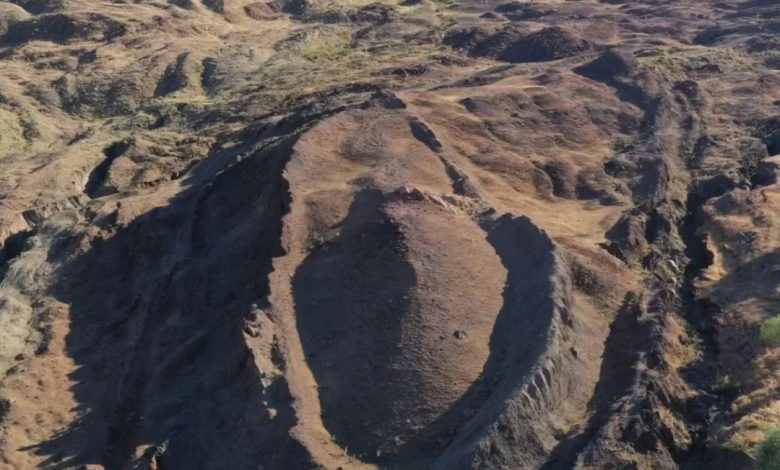
Researchers working in eastern Turkey say new analyses from the Durupınar Formation—a boat-shaped geological feature long linked by some to the story of Noah’s Ark—show evidence consistent with ancient human activity and materials associated with a wetter or marine-influenced environment in the distant past. The findings are being discussed as part of an ongoing research effort that began in 2021.
Where the Site Is
- The site is in the Doğubayazıt district of Ağrı, in eastern Turkey.
- It lies less than 2 miles (about 3 km) from the Iran–Turkey border.
- The formation is located about 18 miles (roughly 29 km) south of the Greater Mount Ararat summit.
- The Durupınar Formation is described as a 538-foot (about 164 m) geological feature, composed largely of limonite.

What Scientists Collected and Tested
Researchers reported that they:
- Collected nearly 30 rock and soil samples from the area.
- Analyzed those samples in a laboratory setting (including at a major technical university in Istanbul).
- Conducted a dating study that placed the samples at approximately 3,500 to 5,000 years old.
Key Findings Reported
The research team’s early conclusions focused on two main points:
- Possible Human Presence/Activity
- Researchers said the area shows signs that people may have been active there during the Chalcolithic period, estimated as between 5500 and 3000 BC.
- Materials Suggesting a Water-Influenced Past
- The sample results were described as containing clayey materials and marine-related materials, including references to seafood-related evidence being present in the area during that broad time window.
Why the Site Is Linked to Noah’s Ark
Supporters of the ark theory often point to:
- The formation’s shape and scale, which they argue resembles a large vessel.
- A claim that its proportions align with the biblical description in Genesis (often summarized as 300 cubits long, 50 cubits wide, 30 cubits high).
- The broader religious tradition: Christianity, Judaism, and Islam all contain narratives about Noah and a great flood, which keeps interest in potential physical “resting sites” high.

History of the Durupınar Formation Claim
- The formation was reportedly noticed locally in 1948.
- It gained wider attention after being identified in 1951 by a Turkish Army captain during an aerial mapping mission.
What the Findings Do (and Don’t) Prove
It’s important to separate what was reported from what is scientifically confirmed:
- What the results support:
- The site may have been connected to ancient settlement or human activity in the region.
- Certain materials in the samples may point to environmental conditions involving significant water in the past.
- What the results do not establish:
- They do not confirm that the formation is a man-made ship.
- They do not prove the historical authenticity of the Noah’s Ark story as a specific physical artifact at this location.
- A boat-like outline can still be explained as a natural geological formation, especially in a region shaped by tectonics and landslides.
Who Is Doing the Research and What Happens Next
- The work is described as a collaboration involving Turkish and American universities.
- A dedicated group, the “Mount Ararat and Noah’s Ark Research Team,” has been formed to focus on the site and its surrounding region.
- The team has discussed expanding research and coordinating studies across nearby areas considered important in ancient regional traditions.
Source: nypost.com