A Shocking X-Ray Reveals the Hidden Risks of Chronic Constipation
How Digestion Normally Works
Our digestive system breaks down the food we eat so the body can absorb nutrients. What the body doesn’t use becomes stool (waste), which is normally removed during a bowel movement.
What Constipation Is and Why It Happens
Constipation occurs when the body has trouble passing stool. It commonly causes:
- Abdominal pain
- Hard or difficult bowel movements
- Bloating
Sometimes constipation is triggered by diet changes, but nearly everyone experiences it at least once. The problem becomes much more serious when it turns into chronic constipation.
A Shocking Medical Case: The X-Ray That Alarmed Doctors
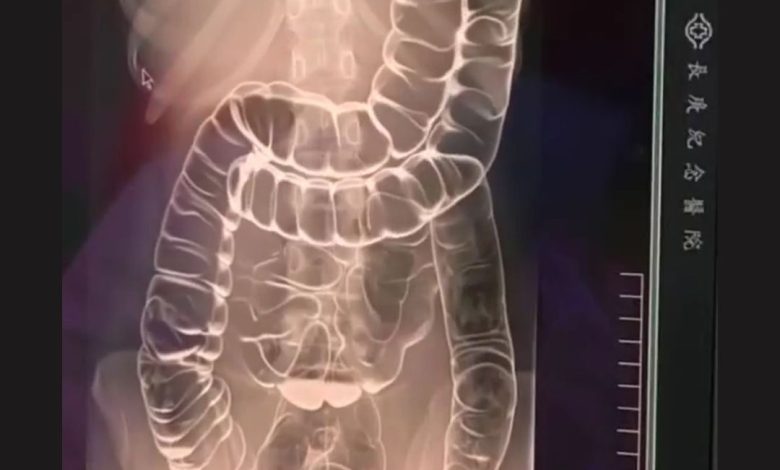
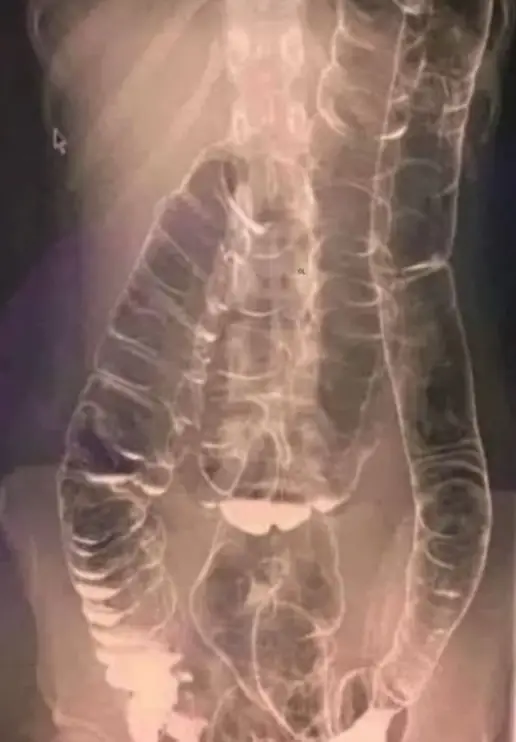
In one extreme case, a woman reportedly went two weeks without a bowel movement. Doctors were shocked by an X-ray showing that her colon had become dangerously enlarged due to the excessive buildup of waste.
- The colon expanded upward toward the chest, close to the heart
- The colon’s normal folds (important for function) were reported to have disappeared
This kind of severe constipation can become life-threatening if not treated.
What Chronic Constipation Can Do to the Body
When the colon is forced to stretch beyond its normal size, it may start to lose the ability to squeeze and push stool forward. In serious cases, toxins may enter the bloodstream and may be linked with symptoms such as:
- Reduced immunity
- Bloating
- Bad breath
- Acne
- Chronic fatigue
Major Complications Doctors Worry About
Chronic constipation can lead to painful and dangerous complications, including:
- Hemorrhoids (swollen veins in the rectum)
- Anal fissures (small tears that can cause severe pain during bowel movements)
- Bowel blockage (intestinal obstruction) — one of the most serious risks
A blockage can cause a complete stoppage in the intestines and may lead to severe infection and tissue damage. In advanced cases, surgery may be required. Chronic constipation is also associated with a higher risk of colon cancer.
How to Help Prevent Constipation
Many cases can be reduced by healthy daily habits, such as:
- Eating a balanced, fiber-rich diet
- Staying well-hydrated
- Exercising regularly
- Building a consistent bathroom routine
Medical Disclaimer
This article is for informational purposes only and is not a substitute for professional medical advice, diagnosis, or treatment. Always consult a qualified healthcare provider regarding any health concerns.