A Fourth Grader’s Beach Walk Turns Into a Once-in-a-Lifetime Fossil Discovery
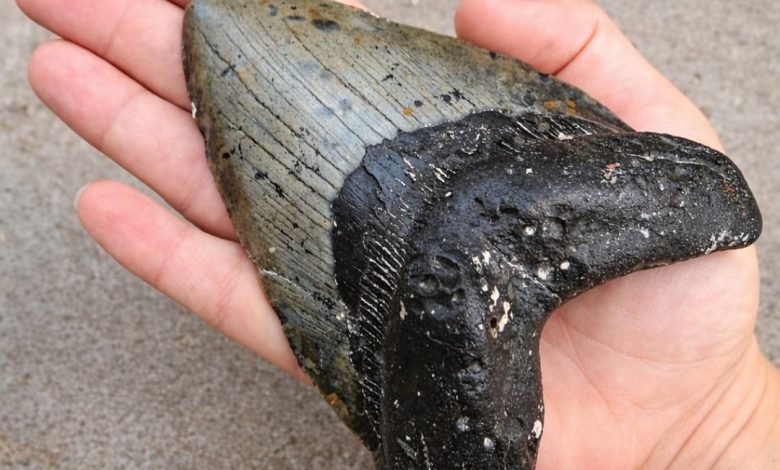
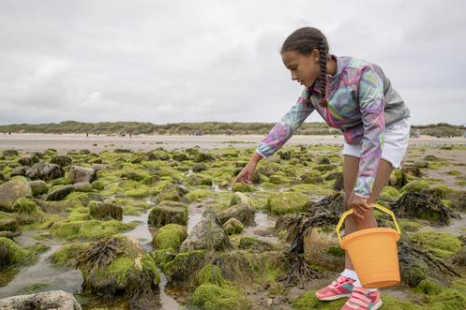
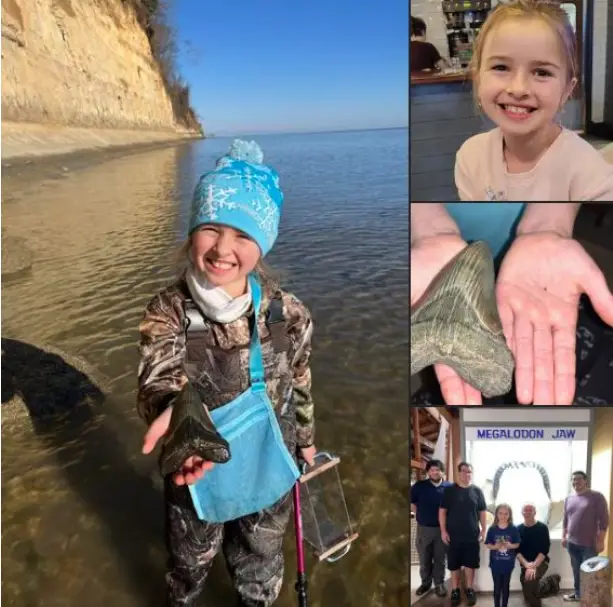
Prince Frederick, Maryland — Molly Sampson, a nine-year-old 4th grader, made an extraordinary discovery while visiting Calvert Beach on Christmas morning. Known in her family as a dedicated “treasure hunter,” Molly spends her free time searching Maryland shorelines for fossils—especially shark teeth—because, as she puts it, “They’re just cool because they’re really old.”
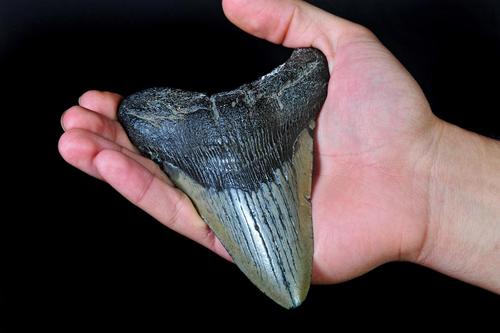
Molly’s love of fossils was inspired by her father, and over the years she has built an impressive personal collection of more than 400 fossilized shark teeth. But her latest find stood out immediately: an enormous, 5-inch-long tooth that later turned out to be from a megalodon, the largest shark believed to have ever ruled the oceans.
A Museum Expert Confirms the Tooth’s Incredible Origin
After Molly found the tooth, her family brought it to Stephen Godfrey, a curator of paleontology at the Calvert Marine Museum in Solomons. Godfrey confirmed the fossil belonged to a megalodon—a prehistoric shark famous for its massive size and powerful bite.
According to Molly’s mother, Alicia Sampson, Godfrey explained to Molly that the shark would have been about the size of a Greyhound bus, a comparison Molly looked up for herself—and couldn’t believe.
Molly’s Reaction: “The Biggest Tooth I’ve Ever Seen!”
Molly recalled the moment she noticed the tooth on the beach:
- “I went closer, and in my head, I was like, ‘Oh, my, that is the biggest tooth I’ve ever seen!’”
- She said she grabbed it, and her dad noticed she was “shrieking” from excitement.
What Scientists Believe About the Tooth
Godfrey said the tooth likely came from the upper left jaw of a megalodon that was:
- About 45 to 50 feet long
- Living approximately 15 million years ago
- Equipped with teeth designed to cut chunks from prey, similar to how great white sharks feed today—biting pieces rather than swallowing large animals whole
Why It’s Called “Megalodon”
The name “Megalodon” comes from two Greek words meaning “giant tooth.” Fittingly, Molly’s tooth is so large it measures about the size of her hand.
A Bigger Message: Getting Kids Outside
As Molly’s story spread quickly and captured widespread attention, her family chose to use the moment for something bigger than the fossil itself: encouraging children to spend more time outdoors.
Alicia Sampson said their goal is to help other kids feel excited about being outside, exploring nature, and discovering things with their own eyes—just like Molly did on a quiet Christmas morning at the beach.