Who Is Old Enough To Remember When Girls Could Notwear Pants To School?
For many Americans who grew up in the 1950s, 1960s, and early 1970s, school clothes were not simply a matter of personal style. They were part of a strict set of rules that students were expected to follow every day.
One of the most memorable rules was this: in many schools, girls were not allowed to wear pants to class. Dresses and skirts were considered the “proper” choice for female students, even during cold weather. For girls, school clothing often meant a modest dress, a skirt with a blouse, or a sweater that could not be too tight or too casual.
Dress codes were serious business. Skirts could not be too short. Sweaters could not be too fitted. Jeans, often called “dungarees” at the time, were usually forbidden for both boys and girls. What many people today consider normal school clothing would have been seen as disrespectful or inappropriate in many classrooms back then.
Students who broke the rules could face real consequences. Some were given detention, while others were sent home to change clothes. In some schools, teachers and administrators checked skirt lengths and general appearance closely.
The strict rules were partly a reflection of the era. During the 1950s, youth culture was changing fast. Rock and roll, greaser fashion, leather jackets, jeans, and rebellious hairstyles were becoming popular among teenagers. To many adults, these trends looked too casual, too bold, or too rebellious for school.
Looking back, it is interesting to realize that some outfits considered “inappropriate” decades ago would seem very modest by today’s standards. A pair of jeans, a sweater, or a simple casual outfit might hardly raise an eyebrow now. But in many schools at the time, those choices could be enough to get a student in trouble.
By the late 1960s and 1970s, attitudes began to shift. As American society changed, schools slowly became more flexible. Girls wearing pants to school became more accepted, especially as women’s fashion and social expectations evolved. Pantsuits, slacks, and more practical clothing became common, and many old dress code rules faded away.
Still, for many people, the memory remains strong: a time when a girl could be told she could not wear pants to school simply because tradition said she shouldn’t.
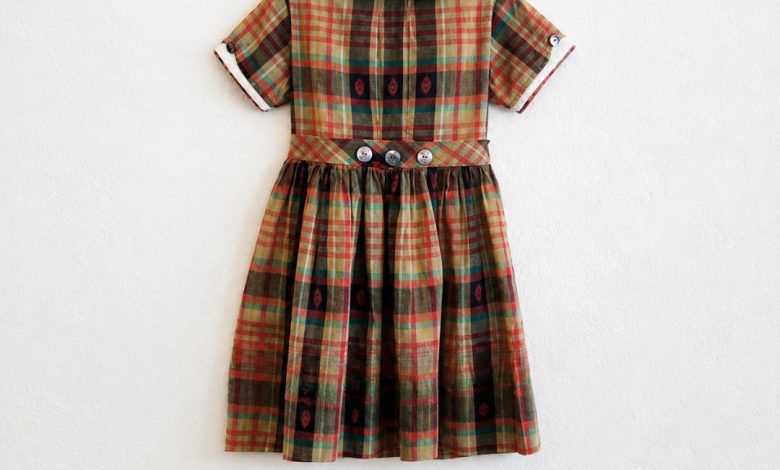
Today, that old rule feels outdated to many Americans. But it is also a reminder of how much school life, fashion, and ideas about gender roles have changed over the years. The plaid school dress in the photo represents more than vintage clothing. It represents an era when students were expected to dress according to strict social standards — and when personal expression in school was far more limited than it is today.