98% Percent Have No Idea What This Is…
What It’s Called
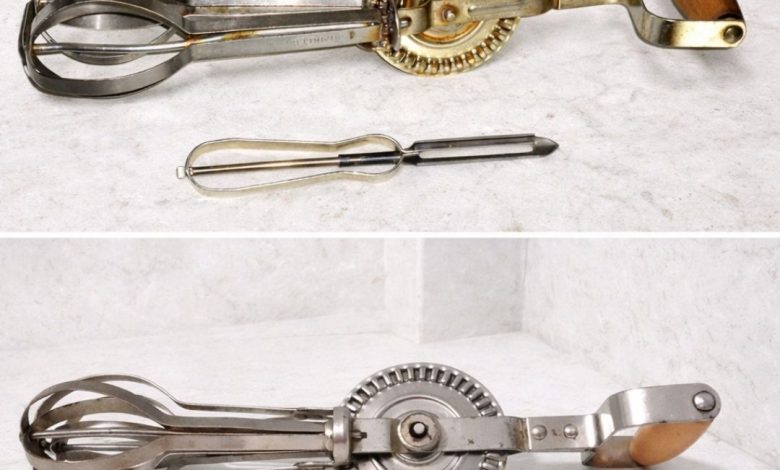
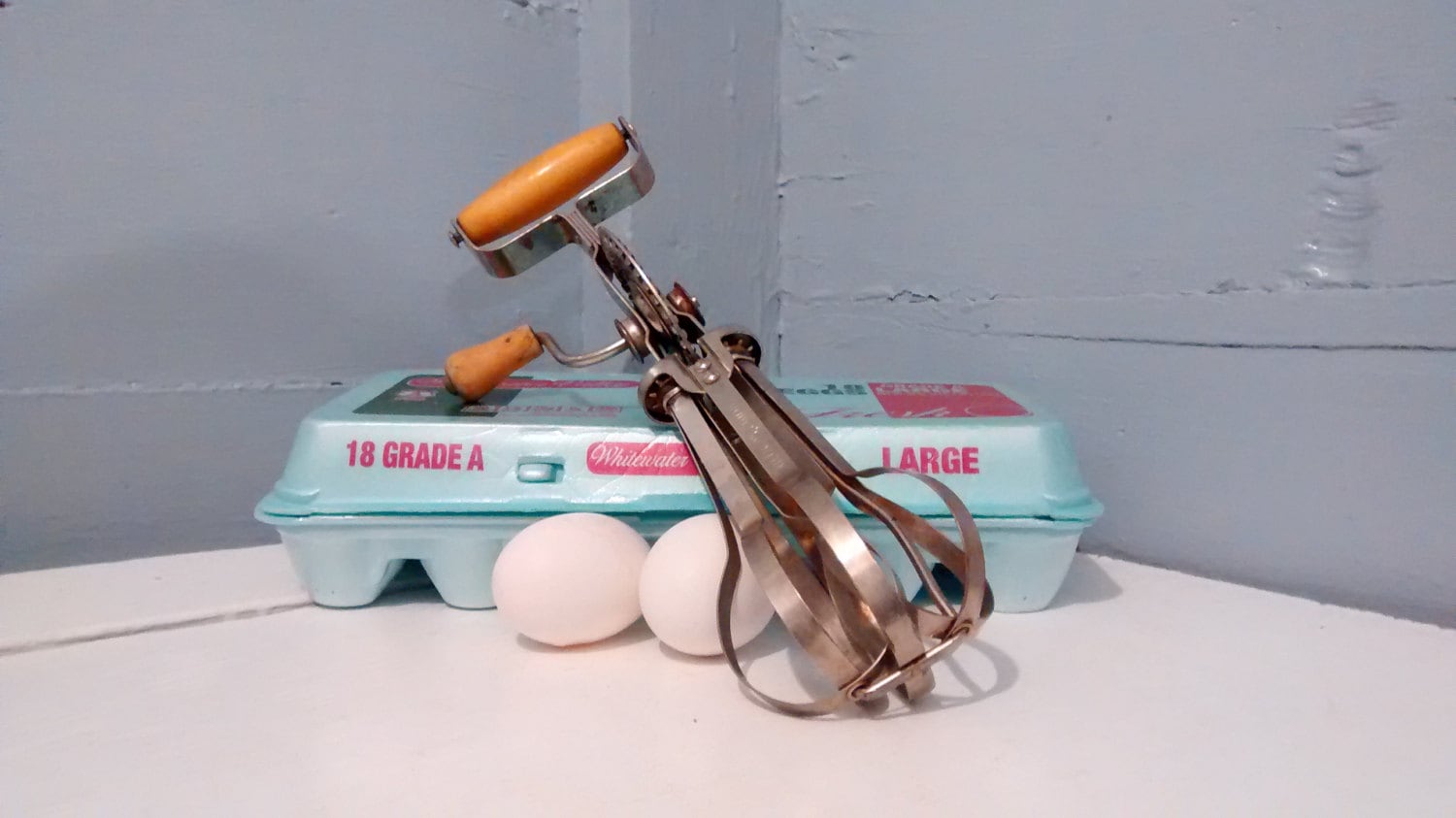
This tool is commonly known as a rotary egg beater, hand-crank egg beater, or hand crank mixer. The examples shown match the mid-century style often described by sellers with phrases like “Blue Whirl” and are frequently associated with Androck models featuring a wood handle.
When It First Appeared
Rotary egg beaters trace their roots to late-1800s mechanical kitchen inventions, when hand-powered gears were introduced to make beating faster and less tiring than a fork or spoon.
The specific style in your images—metal body with a prominent gear wheel and a wood crank grip—is most often linked to mid-20th-century production (especially the 1940s–1950s), when many American households relied on durable, manual tools.
Who Created It
Because these tools evolved through multiple patents and manufacturers, the “creator” depends on whether you mean the general invention or the brand version:
- The invention category (rotary egg beater): Developed through multiple late-19th-century inventors and patents that introduced geared, hand-cranked mixing to home kitchens.
- The brand version shown (Androck / similar mid-century models): Produced and popularized by U.S. kitchenware manufacturers in the 1940s–1950s. In many cases, the individual designer is not publicly documented, but the brand and manufacturing origin (Made in USA on many examples) are the key identifiers collectors use.
What It Was Used For
A rotary egg beater was designed to mix and aerate ingredients quickly without electricity. Typical uses included:
- Beating eggs for omelets, scrambled eggs, and custards
- Whipping cream or light toppings (best in smaller batches)
- Mixing pancake or cake batter (especially thinner batters)
- Blending sauces and gravies to reduce lumps
- Aerating mixtures to create a lighter texture
How It Works (Simple Mechanics)
- Turning the hand crank rotates the gear wheel
- The gear drives the wire beaters, spinning them rapidly
- The spinning beaters pull air into the mixture, helping it foam, thicken, and blend
Key Features Visible in the Photos
- Wooden crank handle for a comfortable grip
- Large circular gear wheel that transfers motion efficiently
- Twin wire beaters designed to whip and aerate
- All-metal frame built for durability and repeated use
- In one photo, a second utensil appears below the beater (a slim vegetable peeler-style tool), reinforcing the “vintage kitchen tool set” context
Why It Was Popular in the 1940s–1950s
- No electricity needed: reliable during everyday cooking and travel
- Fast for small jobs: quicker to grab than setting up larger appliances
- Durable construction: metal gears and frames could last decades
- Easy to store: slimmer than early electric mixers
Collectibility and Modern Use
Today, these beaters are valued as:
- Functional vintage tools for light mixing tasks
- Decor and food-photography props (especially with visible patina and wood handles)
- Collectibles tied to mid-century American kitchenware brands like Androck